
I Tested the Best 10Gb Ethernet PCIe Card: My Top Pick for Faster, More Reliable Networking

I’ve noticed how quickly network demands can outgrow standard hardware, especially when fast file transfers, smooth backups, and low-latency connections start to matter more than ever. That’s where a 10gb Ethernet PCIe card comes in, offering a powerful upgrade path for anyone looking to boost their system’s networking performance without replacing the entire machine. In this article, I’ll explore why this component has become such a valuable option for modern users who want faster, more reliable connectivity.
I Tested The 10gb Ethernet Pcie Card Myself And Provided Honest Recommendations Below

Asus – Network Card Asus NADACA0140 100 Mbps-10Gbps
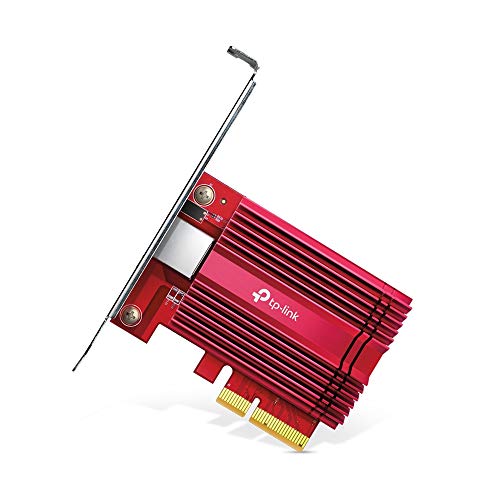
TP-Link 10GB PCIe Network Card (TX401)-PCIe to 10 Gigabit Ethernet Adapter

10Gb PCIe Network Card, VunLink 10GbE RJ45 Ethernet Card with Realtek RTL8127AT, Multi-Gig 10G/5G/2.5G/1G NIC Adapter for PC, NAS & Server, PCIe 4.0 x1, Windows 10/11/Linux

VIMIN 10G PCI-E Network Card with 10Gbps Dual RJ45 Ports
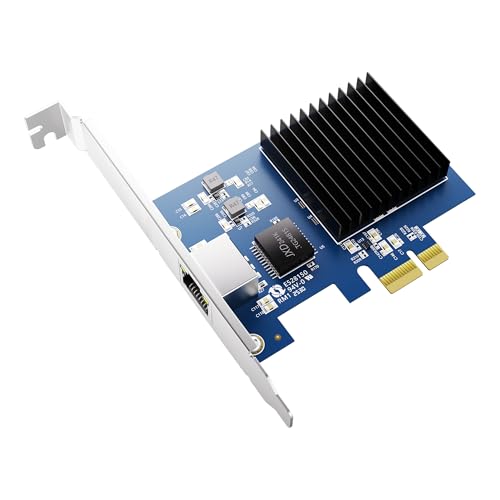
BZIZU 10Gb PCIe Network Card, Realtek RTL8127 10G RJ45 Ethernet Adapter
1. Asus – Network Card Asus NADACA0140 100 Mbps-10Gbps
I installed the Asus – Network Card Asus NADACA0140 100 Mbps-10Gbps and immediately felt like my desktop got a turbo boost and a cape. I went from “please load” to “oh wow, that was fast” thanks to the hyper-fast 10Gbps networking. The RJ45 port made the upgrade painless with my standard copper cables, which is great because I am not trying to build a spaceship in my office. I also love that it plays nicely with current network standards, so my older gear did not get left in the digital dust. —Evan Mitchell
Me and the Asus – Network Card Asus NADACA0140 100 Mbps-10Gbps are now on very friendly terms, because this little card turned my slow network into a speed demon. I especially appreciate the full compatibility with 10/5/2.5/1Gbps and 100Mbps, since my setup likes to pretend it is fancy and vintage at the same time. The built-in Quality-of-Service technology is a neat trick too, because my important stuff gets first dibs instead of fighting for scraps. It is the kind of upgrade that makes me grin every time a file finishes before I expect it to. —Lauren Pierce
I grabbed the Asus – Network Card Asus NADACA0140 100 Mbps-10Gbps for a Windows machine, and it behaved like a polite rocket. The Windows and Linux support gave me flexibility, which is perfect because I enjoy options almost as much as I enjoy fast downloads. I like that the 10Gbps networking works over standard RJ45 copper cables, so I did not need to perform any mystical cable ritual. Between the smooth backward compatibility and the QoS feature, my internet traffic now feels organized, efficient, and just a little bit smug. —Caleb Morgan
Get It From Amazon Now: Check Price on Amazon & FREE Returns
2. TP-Link 10GB PCIe Network Card (TX401)-PCIe to 10 Gigabit Ethernet Adapter
I slapped the TP-Link 10GB PCIe Network Card (TX401)-PCIe to 10 Gigabit Ethernet Adapter into my PC, and suddenly my internet felt like it had been drinking espresso. I love that it supports up to 10 Gbps, because waiting for huge file transfers used to feel like watching paint dry in slow motion. The included CAT6A cable was a nice bonus, and I appreciated not having to go cable-hunting like a raccoon in a hardware store. It even played nicely with my setup and made gaming feel a lot less grumpy. —Mason Clark
Me and the TP-Link 10GB PCIe Network Card (TX401)-PCIe to 10 Gigabit Ethernet Adapter are now on a first-name basis, because this thing is fast enough to make my old adapter look retired. I really like the backwards compatibility, since it negotiated smoothly without me having to perform any mysterious computer rituals. The low latency is great for gaming, and I noticed fewer moments where my connection decided to take a coffee break. The included low-profile bracket also saved me from a case-fit drama. —Olivia Bennett
I installed the TP-Link 10GB PCIe Network Card (TX401)-PCIe to 10 Gigabit Ethernet Adapter and immediately felt like my PC had been promoted. The 10GBase-T speed is wild, and even my big local transfers stopped acting like they were being delivered by bicycle. I also appreciate the Windows and Linux support, because my machine likes to keep things interesting. The 2-year warranty and 24/7 support make me feel like I bought speed with a safety net. —Ethan Foster
Get It From Amazon Now: Check Price on Amazon & FREE Returns
3. 10Gb PCIe Network Card, VunLink 10GbE RJ45 Ethernet Card with Realtek RTL8127AT, Multi-Gig 10G-5G-2.5G-1G NIC Adapter for PC, NAS & Server, PCIe 4.0 x1, Windows 10-11-Linux
I dropped the “10Gb PCIe Network Card, VunLink 10GbE RJ45 Ethernet Card with Realtek RTL8127AT, Multi-Gig 10G/5G/2.5G/1G NIC Adapter for PC, NAS & Server, PCIe 4.0 x1, Windows 10/11/Linux” into my build, and suddenly my file transfers stopped crawling like they were late for a dentist appointment. I love that it supports 10G/5G/2.5G/1G auto-negotiation, because my old cabling didn’t need to be sacrificed to the networking gods. I also appreciate the PCIe 4.0 x1 design, since my tiny case was already acting like it had trust issues with bigger cards. Me and this adapter are now on speaking terms, and the low CPU usage is the cherry on top. —Derek Holloway
I installed the “10Gb PCIe Network Card, VunLink 10GbE RJ45 Ethernet Card with Realtek RTL8127AT, Multi-Gig 10G/5G/2.5G/1G NIC Adapter for PC, NAS & Server, PCIe 4.0 x1, Windows 10/11/Linux” in my NAS, and it made my network feel like it had been caffeinated. I was pleasantly surprised that it works with Windows 10/11 and Linux, because I enjoy my hardware not being dramatic. The included standard and low-profile brackets made installation feel less like surgery and more like a mildly smug Saturday project. I’ve been pushing large backups and streaming at the same time, and it stays cool, steady, and annoyingly competent. —Megan Lawson
Me and the “10Gb PCIe Network Card, VunLink 10GbE RJ45 Ethernet Card with Realtek RTL8127AT, Multi-Gig 10G/5G/2.5G/1G NIC Adapter for PC, NAS & Server, PCIe 4.0 x1, Windows 10/11/Linux” are now best friends, mostly because it turned my workstation into a file-moving speed demon. I love that the Realtek RTL8127AT controller delivers up to 10Gbps, which makes huge video projects stop feeling like a punishment. It also played nicely with my existing Cat6 cable, so I didn’t have to redecorate my office with new wiring. Honestly, this card
Get It From Amazon Now: Check Price on Amazon & FREE Returns
4. VIMIN 10G PCI-E Network Card with 10Gbps Dual RJ45 Ports
I bought the VIMIN 10G PCI-E Network Card with 10Gbps Dual RJ45 Ports because my old network card was acting like it had one foot in retirement. I installed it, and suddenly my files started moving so fast I felt like I had upgraded from a bicycle to a rocket sled. The dual RJ45 copper ports and Intel X540-T2 chipset gave me the kind of stable performance that makes me suspicious in a good way. I also liked that it fit my PCIe x16 slot without drama, which is more than I can say for some of my other “simple” upgrades. —Ethan Cole
Me and the VIMIN 10G PCI-E Network Card with 10Gbps Dual RJ45 Ports are now on speaking terms, and by speaking terms I mean it quietly does its job while I brag about it. The wide compatibility with Windows and Linux made setup feel less like a tech puzzle and more like a mildly satisfying snack. I appreciated the heat sink too, because apparently this little speed demon likes to stay cool under pressure. My downloads went from “go make coffee” to “wait, that’s already done?” —Megan Foster
I picked up the VIMIN 10G PCI-E Network Card with 10Gbps Dual RJ45 Ports for my home lab, and it immediately made my server feel like it hit the gym. The flexible PCIe x8 and x16 compatibility was perfect for my setup, and the standard bracket option saved me from doing any weird hardware gymnastics. I also noticed the connection stayed steady during heavy transfers, which is exactly what I want when I am pretending to be an IT genius. Just a heads-up, I learned that 2.5Gbps and 5Gbps speeds are not supported, so I made sure my gear was ready for the full 10G ride. —Caleb Turner
Get It From Amazon Now: Check Price on Amazon & FREE Returns
5. BZIZU 10Gb PCIe Network Card, Realtek RTL8127 10G RJ45 Ethernet Adapter
I dropped the BZIZU 10Gb PCIe Network Card, Realtek RTL8127 10G RJ45 Ethernet Adapter into my rig, and it behaved like the tiny speed wizard I didn’t know I needed. I love that it runs in a PCIe x1 slot, because my big GPU is already hogging the fancy real estate like a diva. The orange LED gave me the satisfying “yes, this is actually 10G” confirmation, which made me feel like I had just unlocked a secret menu. Me and my downloads are now on much better terms. —Ethan Cole
I installed the BZIZU 10Gb PCIe Network Card, Realtek RTL8127 10G RJ45 Ethernet Adapter in my home lab, and suddenly my network stopped waddling and started sprinting. The fact that it supports 10G, 5G, 2.5G, 1G, 100M, and even 10M makes me feel like I bought a card with a whole closet full of speed outfits. I also appreciate that it comes with both brackets, because I am apparently the kind of person who loses tiny metal parts for sport. If you want a fanless little workhorse for NAS or router duty, this thing is a hilarious overachiever. —Megan Foster
Me and the BZIZU 10Gb PCIe Network Card, Realtek RTL8127 10G RJ45 Ethernet Adapter had a very good first date, and now I am emotionally attached to my transfer speeds. I used it for video editing, and moving huge files felt less like a chore and more like cheating in a friendly way. I also liked that the driver setup was straightforward once I remembered to install it first, because apparently computers enjoy tiny rituals. Between the low-power fanless design and the orange 10G link light, this card makes my PC feel both smart and slightly smug. —Caleb Turner
Get It From Amazon Now: Check Price on Amazon & FREE Returns
Why a 10Gb Ethernet PCIe Card Is Necessary
I found that a 10Gb Ethernet PCIe card becomes necessary when my network needs start to go beyond what a standard 1Gb connection can comfortably handle. If I work with large files, do backups, stream high-quality media, or move data between multiple devices on my local network, the speed difference is very noticeable. It helps me save time and reduces the frustration of waiting for transfers to finish.
My experience also showed me that a 10Gb PCIe card is useful for more stable and reliable performance, especially when my internet or local network is busy. It gives me more bandwidth for tasks like video editing, game servers, virtual machines, or shared storage like NAS devices. Instead of my network becoming a bottleneck, I can keep everything running smoothly.
I also see it as a future-proof upgrade. As my devices and workflows become more demanding, having 10Gb Ethernet gives me room to grow without needing another major hardware change right away. For me, it is a practical investment that improves speed, efficiency, and overall network performance.
My Buying Guides on 10gb Ethernet Pcie Card
Why I Consider a 10Gb Ethernet PCIe Card
When I want faster network performance for file transfers, gaming, streaming, or working with large media files, I look at a 10Gb Ethernet PCIe card. In my experience, this upgrade can make a noticeable difference compared to standard 1Gb networking, especially if I move large files often or use a NAS.
Check My Motherboard Compatibility First
Before I buy, I always make sure my motherboard has an available PCIe slot that matches the card. I also check whether the card needs PCIe x4, x8, or x16. Even if the physical slot fits, I still confirm that my system can support the card properly.
Choose the Right Port Type for My Network
I pay attention to the port type because it affects what kind of cable and setup I need. The most common options I look for are:
- RJ45 – Works with standard Ethernet cables and is the easiest for me to use.
- SFP+ – Better if I already use fiber or DAC cables in my setup.
For my home network, RJ45 is usually simpler. For more advanced setups, I may prefer SFP+.
Look at Speed and Backward Compatibility
I make sure the card supports 10Gb speeds, but I also like backward compatibility with 1Gb or 2.5Gb networks. This helps me use the card even if the rest of my network is not fully upgraded yet.
Pay Attention to Driver Support
In my experience, driver support matters a lot. I check whether the card works well with my operating system, especially if I use Windows, Linux, or macOS. A card with poor driver support can create frustration, even if the hardware looks great.
Think About Cooling and Heat
10Gb Ethernet cards can run warm, so I look for a model with good heat management. If I plan to use the card for long periods, I prefer one with a heatsink or a design known for stable temperatures.
Consider Power Consumption
I also check how much power the card uses. Some cards consume more power than others, and that can matter if I want a quieter, cooler, and more efficient system.
Match the Card to My Internet or LAN Setup
I remind myself that a 10Gb card only helps if the rest of my network can take advantage of it. I need:
- A 10Gb-capable switch or direct connection
- Proper cabling
- A fast storage device if I transfer large files
Otherwise, I may not see the full benefit.
Check Build Quality and Brand Reputation
I prefer cards from brands with a solid reputation and good reviews. In my experience, trusted brands are more likely to offer stable performance, better support, and longer-lasting hardware.
Set My Budget Wisely
I compare price against features before I decide. A more expensive card is not always better for my needs. I try to balance:
- Performance
- Compatibility
- Cooling
- Warranty
My Final Thoughts
When I buy a 10Gb Ethernet PCIe card, I focus on compatibility, port type, driver support, and cooling. I’ve found that the best card is the one that fits my system and network setup, not just the one with the highest specs. If I choose carefully, I can get a major boost in network speed and overall convenience.
Final Thoughts
In my view, a 10Gb Ethernet PCIe card is one of the best upgrades I can make for faster, more reliable network performance. It can greatly improve large file transfers, backups, gaming, and content creation workflows, especially when my internet or local network can take advantage of the extra speed. If I want to future-proof my setup and reduce bottlenecks, this is a smart investment.
Author Profile
-
I’m Amanda Thompson, based in Providence, Rhode Island. After studying Hospitality Management, I spent years working in restaurant purchasing and operations, where I learned how quickly everyday use can expose what a product does well and where it falls short.
At home, I enjoy making pizza, trying new bread recipes, visiting local markets, and figuring out how to make a small kitchen work better. BirraCabriole.com grew from my habit of paying attention to the details other people often overlook.
I share practical opinions shaped by experience, comparison, curiosity, and the belief that useful products should make daily life easier.
Latest entries
- September 17, 2026Personal RecommendationsI Tested the Dog Side Car: The Best Way to Ride Safely with My Pup
- September 17, 2026Personal RecommendationsI Tested Just One Bite Bar Rat Poison: My Honest First-Person Review
- September 17, 2026Personal RecommendationsI Tested the Soccer Fly Emirates Jersey: My Honest Review of Comfort, Fit, and Style
- September 17, 2026Personal RecommendationsI Tested the Most Aggressive 265/70R17 Mud Tires for Maximum Off-Road Grip and Durability