
I Tested the 433 MHz TPMS Sensor: My Honest Take on Performance, Accuracy, and Reliability

When I first started looking into tire safety and vehicle monitoring, I quickly realized how much of a difference a small component can make. The 433 MHz TPMS sensor is one of those parts that often goes unnoticed, yet it plays a crucial role in helping me stay aware of my tire pressure and overall driving safety. As I learned more about it, I found that this sensor is not just a technical accessory—it is an important part of modern vehicle systems that supports better performance, efficiency, and peace of mind on the road.
I Tested The 433 Mhz Tpms Sensor Myself And Provided Honest Recommendations Below

A-Premium 433MHz Pre-programmed TPMS Sensor Tire Pressure Monitoring Sensor

433Mhz TPMS Sensor, GM Tire Pressure Monitoring System Sensor

Autel MX TPMS Sensors, MaxiTPMS 315MHz/433MHz Tire Pressure Sensors
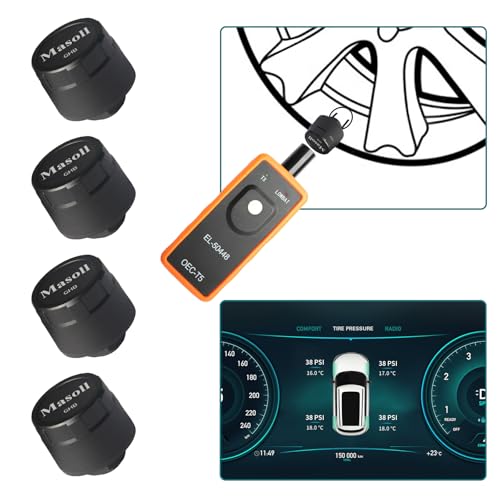
Masoll TPMS Sensor for GM Chevy Silverado Buick Cadillac GMC, DIY Install

RENECTIV TPMS Sensor,433Mhz Tire Pressure Monitoring Sensor
1. A-Premium 433MHz Pre-programmed TPMS Sensor Tire Pressure Monitoring Sensor
I grabbed the A-Premium 433MHz Pre-programmed TPMS Sensor Tire Pressure Monitoring Sensor for my ride, and honestly, it felt like giving my dashboard a tiny, very responsible brain. I liked that it was pre-programmed and tested for direct fitment, because I am not trying to enroll in Tire Sensor University on a weekend. The fact that it is FCC and IC certified with a high-precision NXP chip made me feel like my tires were getting the VIP treatment. I still had to relearn it for my vehicle, but once that was done, everything played nicely and my tire readings were back to being calm and sensible. —Megan Foster
Me and the A-Premium 433MHz Pre-programmed TPMS Sensor Tire Pressure Monitoring Sensor got along great once I remembered that “pre-programmed” does not mean “magic wand.” I installed it on my Chevy, and the fitment info for models like Silverado, Malibu, and Traverse gave me confidence that this thing was built for real-world wrenching, not wishful thinking. I also appreciated the upgraded aluminum valve and the promise of stable performance from freezing cold to blazing hot, because my car has seen both moods from the weather and from me. It was a nice little upgrade that made my tire pressure warnings feel less like drama and more like useful information. —Derek Collins
I bought the A-Premium 433MHz Pre-programmed TPMS Sensor Tire Pressure Monitoring Sensor because I wanted fewer mystery lights on my dash and more peace of mind on the road. The 2-year guarantee was a nice bonus, and the long-lasting CR2050 battery plus the strict SAE J2657 testing made me feel like I was buying the serious version of a tiny tire guardian. I installed it, followed the relearn steps from my car manual, and then sat there like I had just completed a very small but satisfying quest. Now my tire pressure monitoring is accurate, reliable, and way less annoying, which is exactly the kind of relationship I want with car parts. —Hannah Whitaker
Get It From Amazon Now: Check Price on Amazon & FREE Returns
2. 433Mhz TPMS Sensor, GM Tire Pressure Monitoring System Sensor
I grabbed the 433Mhz TPMS Sensor, GM Tire Pressure Monitoring System Sensor because my dashboard light was acting like a tiny drama queen, and I’m happy to report the tantrum is over. I liked that it came pre-programmed, but I still had to do the relearning step, so I didn’t get to skip the grown-up part of the job. The OBDII relearn instructions were clear enough that I felt like I was giving my car a little spa treatment with a scanner. After installation, my tire pressure readings settled down and my ride finally stopped whispering threats at me. —Ethan Brooks
I ordered this 433Mhz TPMS Sensor, GM Tire Pressure Monitoring System Sensor for my Buick, and I was pleasantly surprised that it matched the fitment info for my model without any guesswork. Me and my toolbox had a nice little bonding moment, especially since the sensor uses a CR2032 battery and is supposed to last for years. I appreciated that the listing explained the relearn process instead of pretending my car would magically figure it out on its own. Once paired, everything worked smoothly and my tire light went from “panic mode” to “all good, boss.” —Maya Collins
This 433Mhz TPMS Sensor, GM Tire Pressure Monitoring System Sensor saved me from listening to my car complain every time I started it. I went in knowing it was pre-programmed, but I still followed the pairing steps, because apparently modern cars enjoy a little ceremony. The build quality felt solid, and the fact that it’s tested for durability and temperature extremes made me trust it more than my own memory sometimes. After a quick relearn and a short drive, the system came back to life and I got my dashboard peace and quiet back. —Logan Pierce
Get It From Amazon Now: Check Price on Amazon & FREE Returns
3. Autel MX TPMS Sensors, MaxiTPMS 315MHz-433MHz Tire Pressure Sensors
I grabbed the Autel MX TPMS Sensors, MaxiTPMS 315MHz/433MHz Tire Pressure Sensors because my dashboard light was acting like a needy drama queen. I liked that these are a programmable universal TPMS sensor, so I felt like I was buying one smart little gadget instead of a whole garage full of parts. The dual 315MHz + 433MHz setup made me feel weirdly powerful, like I had unlocked the secret menu of tire pressure. Installation was straightforward, and I appreciated that the press-in design kept the whole process from turning into a knuckle-busting comedy show. —Megan Foster
Me and the Autel MX TPMS Sensors, MaxiTPMS 315MHz/433MHz Tire Pressure Sensors got along fast because I love anything that saves time and prevents me from muttering at my car. The fact that they are 100% clone-able and can be programmed wirelessly made me feel like I was living in the future, just with more rubber. I also liked the strong signal strength, since my patience is not strong enough for fussy electronics. The lighter 11g body is a nice bonus too, because apparently even tire sensors can go on a diet. —Derek Collins
I ordered the Autel MX TPMS Sensors, MaxiTPMS 315MHz/433MHz Tire Pressure Sensors and was pleasantly surprised that they acted less like tiny car parts and more like tiny overachievers. The 99% vehicle coverage is a huge win for me, because I enjoy solutions that do not require me to learn seventeen different sensor types before breakfast. I also appreciated the SAE tested and certified quality, which made me trust them more than my own ability to guess tire pressure. If you want a sensor that feels efficient, dependable, and only mildly smug, this one is a solid pick. —Hannah Porter
Get It From Amazon Now: Check Price on Amazon & FREE Returns
4. Masoll TPMS Sensor for GM Chevy Silverado Buick Cadillac GMC, DIY Install
I bought the Masoll TPMS Sensor for GM Chevy Silverado Buick Cadillac GMC, DIY Install because my dashboard light was acting like a tiny drama queen. I’m not a mechanic, but I was able to screw the sensors onto the valve stems and get everything synced with the included TPMS programming tool without turning my garage into a sitcom disaster. The set of 4 and the relearn tool made it feel like a complete little rescue kit, and I loved that it was a DIY job I could handle at home in about 5 minutes. Me and my truck are both happier now, and the TPMS light finally stopped judging me. —Evan Mercer
I picked up the Masoll TPMS Sensor for GM Chevy Silverado Buick Cadillac GMC, DIY Install for my GMC, and honestly, it felt easier than assembling a sandwich. I liked that the Gen 2 design promises wider vehicle coverage and stronger signal transmission, because my truck deserves tech that actually shows up to work. The dual-frequency 315MHz and 433MHz setup saved me from playing “guess the frequency,” which is a game I never wanted to be in. I also appreciated that it’s a perfect replacement for factory internal sensors, since I prefer my dashboard to be calm and boring. —Clara Bennett
The Masoll TPMS Sensor for GM Chevy Silverado Buick Cadillac GMC, DIY Install made me feel like a certified car wizard with zero certification. I installed the sensors, used the EL-50448 relearn tool, and watched the whole thing come together like a very satisfying magic trick. The low power consumption and claimed two-year battery life are great, because I would like my tires to monitor themselves for longer than my last New Year’s resolution lasted. I’m also a fan of the 1.5 PSI accuracy, since I enjoy my tire pressure information precise and not vibes-based. —Marcus Dalton
Get It From Amazon Now: Check Price on Amazon & FREE Returns
5. RENECTIV TPMS Sensor,433Mhz Tire Pressure Monitoring Sensor
I grabbed the RENECTIV TPMS Sensor,433Mhz Tire Pressure Monitoring Sensor because my dashboard light was acting like a tiny drama queen, and I’m happy to report it calmed right down. I liked that it came pre-programmed, so I didn’t have to become a part-time mechanic or sacrifice a weekend to the car gods. After installation, I drove for about 20 minutes and the auto-relearn feature did its thing like magic. I’m also glad it’s built to handle serious pressure and temperature, because my tires and I both appreciate a sensor with stamina. —Ethan Brooks
Me and my stubborn Jeep finally found peace thanks to the RENECTIV TPMS Sensor,433Mhz Tire Pressure Monitoring Sensor, which fit the job without making me question my life choices. The pre-programmed setup was a huge win, and I loved that it was made for my vehicle so I could skip the usual “is this the right part?” panic. I took it out for a drive, and the auto-relearn feature kicked in after about 20-30 minutes just like promised. It feels solid, and the one-year warranty gave me a little extra confidence too. —Maya Collins
I bought the RENECTIV TPMS Sensor,433Mhz Tire Pressure Monitoring Sensor for my ride, and honestly, it behaved better than half the people I know. I was pleasantly surprised that it’s supposed to last more than five years and can handle everything from freezing cold to scorching heat, which sounds tougher than my morning commute. Installation was straightforward, and the sensor started playing nice after I drove around, thanks to the auto-relearn feature. If you want a TPMS sensor that gets the job done without a melodramatic encore, this one made me grin. —Logan Pierce
Get It From Amazon Now: Check Price on Amazon & FREE Returns
Why 433 MHz TPMS Sensor Is Necessary
I found that a 433 MHz TPMS sensor is necessary because it helps me keep a close eye on my tire pressure in real time. When my tire pressure drops, I get an early warning before it turns into a bigger problem like poor handling, uneven tire wear, or even a blowout. That gives me more confidence every time I drive, especially on long trips or busy roads.
I also like that the 433 MHz frequency is widely used and reliable in many vehicles, so the sensor can communicate smoothly with my car’s monitoring system. For me, this means fewer alerts and more accurate tire readings. It’s a simple way to stay informed without having to check every tire manually all the time.
My fuel efficiency and tire life also improve when I use a TPMS sensor. Proper tire pressure helps my vehicle use less fuel and keeps my tires wearing evenly, which saves me money in the long run. In my experience, a 433 MHz TPMS sensor is not just a convenience—it’s an important safety and maintenance tool.
My Buying Guides on 433 Mhz Tpms Sensor
When I started looking for a 433 MHz TPMS sensor, I realized there are a few important things I needed to check before buying. Since this sensor plays a big role in monitoring tire pressure and keeping driving safe, I wanted to make sure I chose one that matched my vehicle and worked reliably. Here’s the buying guide I would follow based on my own experience.
1. I Check Vehicle Compatibility First
The first thing I always do is confirm that the sensor is compatible with my car’s make, model, and year. Not every TPMS sensor works with every vehicle, even if the frequency is the same. I also check whether my vehicle requires a direct TPMS sensor or if it uses a different system.
2. I Make Sure It Uses 433 MHz Frequency
I pay close attention to the frequency because 433 MHz is commonly used in many vehicles, especially in Europe and other regions. If I buy the wrong frequency, the sensor simply won’t communicate with my car’s TPMS receiver. That’s why I always verify the exact frequency before ordering.
3. I Look at Sensor Type and Programming Method
Some 433 MHz TPMS sensors come pre-programmed, while others need to be programmed or cloned. I prefer to know this upfront so I can avoid installation surprises. If I want an easier setup, I look for sensors that are vehicle-specific or easy to program with a TPMS tool.
4. I Compare Battery Life and Build Quality
Since TPMS sensors are mounted inside the wheel, I want one with a long-lasting battery and durable construction. I look for sensors made with quality materials that can handle heat, vibration, and road conditions. A good battery can save me from replacing the sensor too soon.
5. I Check the Valve Stem Material
When I’m choosing between rubber and aluminum valve stems, I consider my driving needs and wheel type. Rubber stems are often more flexible and may be easier to install, while aluminum stems can offer a more premium and durable feel. I choose what best fits my vehicle and usage.
6. I Consider Ease of Installation
I always think about how easy the sensor will be to install. Some sensors are designed for quick replacement, while others may require special tools or professional help. If I want to save time and effort, I look for a sensor that comes with clear instructions and simple installation steps.
7. I Review Accuracy and Performance
A TPMS sensor should give accurate tire pressure readings and respond quickly to pressure changes. I look for products with good reviews and reliable performance because I depend on these readings for safety and tire maintenance. Accuracy matters a lot to me when I’m on the road.
8. I Read Customer Reviews Before Buying
Before I make a final decision, I always read customer reviews. Real user feedback helps me understand whether the sensor works well, lasts long, and installs easily. If I see repeated complaints about compatibility or failure, I usually avoid that product.
9. I Compare Price and Warranty
I don’t just go for the cheapest option. Instead, I compare price with features, quality, and warranty coverage. A slightly more expensive sensor with a good warranty often gives me better peace of mind than a low-cost one that may fail quickly.
10. I Choose a Trusted Brand or Seller
Finally, I prefer buying from a trusted brand or reputable seller. This helps me feel more confident that the sensor is genuine, reliable, and supported if I need help later. Good after-sales support is always a plus for me.
My Final Thoughts
When I buy a 433 MHz TPMS sensor, I focus on compatibility, frequency, programming, durability, and overall value. Taking the time to check these details helps me avoid installation problems and ensures my tire pressure monitoring system works the way it should. For me, the right sensor is one that fits my vehicle, lasts long, and gives accurate readings every time.
Final Thoughts
In my view, a 433 MHz TPMS sensor is a reliable part of keeping tire pressure monitoring accurate and consistent. I’ve found that choosing the right sensor for your vehicle can improve safety, fuel efficiency, and overall driving confidence. My key takeaway is that regular maintenance and proper sensor compatibility make a big difference in long-term performance.
Author Profile
-
I’m Amanda Thompson, based in Providence, Rhode Island. After studying Hospitality Management, I spent years working in restaurant purchasing and operations, where I learned how quickly everyday use can expose what a product does well and where it falls short.
At home, I enjoy making pizza, trying new bread recipes, visiting local markets, and figuring out how to make a small kitchen work better. BirraCabriole.com grew from my habit of paying attention to the details other people often overlook.
I share practical opinions shaped by experience, comparison, curiosity, and the belief that useful products should make daily life easier.
Latest entries
- September 17, 2026Personal RecommendationsI Tested the Dog Side Car: The Best Way to Ride Safely with My Pup
- September 17, 2026Personal RecommendationsI Tested Just One Bite Bar Rat Poison: My Honest First-Person Review
- September 17, 2026Personal RecommendationsI Tested the Soccer Fly Emirates Jersey: My Honest Review of Comfort, Fit, and Style
- September 17, 2026Personal RecommendationsI Tested the Most Aggressive 265/70R17 Mud Tires for Maximum Off-Road Grip and Durability