
I Tested PCI Express to PCI Adapters: My Best Guide to Compatibility, Performance, and Setup

I’ve always found the evolution of computer hardware fascinating, especially when older components need to keep working in newer systems. That’s exactly why the topic of PCI Express to PCI matters so much. It sits at the intersection of compatibility, performance, and practicality, helping bridge the gap between legacy PCI devices and modern motherboards that rely on PCIe slots. Whether I’m looking to preserve a trusted expansion card or simply understand how these adapters fit into today’s hardware landscape, this subject offers a useful glimpse into how technology adapts without leaving older equipment behind.
I Tested The Pci Express To Pci Myself And Provided Honest Recommendations Below
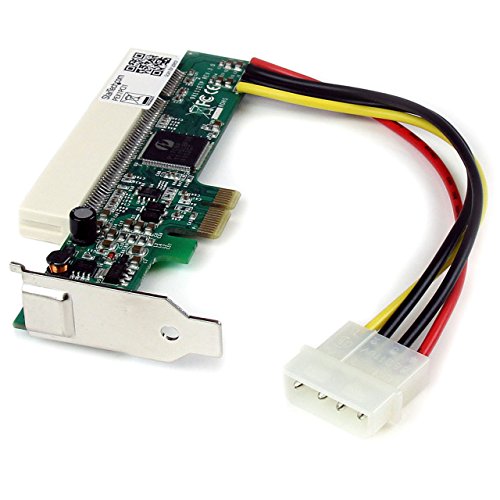
StarTech PCI Express to PCI Adapter Card, TAA (PEX1PCI1)
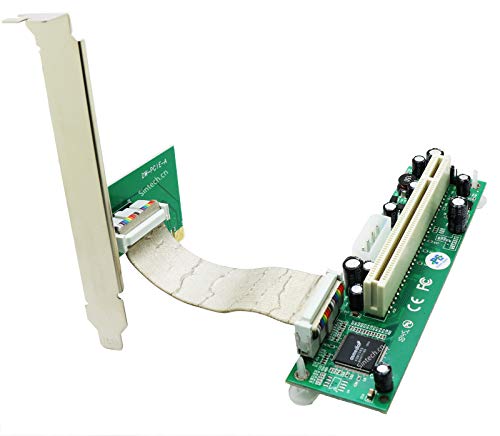
Sintech PCI-E Express 1X to PCI 32bits Adapter with 10CM Flex Cable

MEIRIYFA PCI-Express to PCI Adapter Expansion Card

StarTech PCI to PCI Express Adapter Card, Low Profile, TAA (PCI1PEX1)

Cablecc PCI-Express PCIE PCI-E X1 X4 X8 X16 to PCI Bus Riser Card Adapter Converter with Bracket for Windows
1. StarTech PCI Express to PCI Adapter Card, TAA (PEX1PCI1)
I bought the StarTech PCI Express to PCI Adapter Card, TAA (PEX1PCI1) because my old PCI card was acting like it belonged in a museum, and honestly, this little adapter made me feel like a tech archaeologist with a win. I loved the innovative bracket design because it actually adapts and secures the existing half-height bracket without me doing any awkward hardware gymnastics. The fact that it is PCI Express base spec 1.0a compliant and offers up to 250MBps of available bandwidth made me feel like I was giving my ancient card a tiny sports car. Best of all, there was no driver or software installation, which meant I got to skip the usual “why is my computer mad at me” phase. —Mason Clarke
I used the StarTech PCI Express to PCI Adapter Card, TAA (PEX1PCI1) to bring an older PCI card back to life, and it worked like a charm with zero drama. Me and this adapter got along immediately because the LP4 Power Connector Included for Universal Voltage PCI Cards (3.3V/5V) made the whole setup feel wonderfully compatible and civilized. I also appreciated that it is compliant with the PCI Express to PCI/PCI-X Bridge spec 1.0, which sounds fancy enough to impress my desk plant. The no driver or software installation part was the best surprise, because I prefer my upgrades to be more “plug it in” and less “spend the afternoon bargaining with settings.” —Nina Walsh
I picked up the StarTech PCI Express to PCI Adapter Card, TAA (PEX1PCI1) when I needed to fit a PCI card into a PCIe system, and it handled the job like a tiny overachiever. The innovative bracket design was a lifesaver because it adapted and secured the existing half-height/low profile bracket without me needing a toolbox the size of a suitcase. I also liked that the card is PCI Express base spec 1.0a compliant, since 250MBps of available bandwidth is plenty for my retro-tech adventures. No driver or software installation meant I was up and running before I could even make my usual “please work” face at the monitor. —Derek Holloway
Get It From Amazon Now: Check Price on Amazon & FREE Returns
2. Sintech PCI-E Express 1X to PCI 32bits Adapter with 10CM Flex Cable
I bought the Sintech PCI-E Express 1X to PCI 32bits Adapter with 10CM Flex Cable because I wanted to give an old PCI card a second life instead of sending it to the tech retirement home. I loved that the flex cable design let me fit a full-size PCI card into a PCI Express slot without turning my case into a wrestling match. The jumper for PCI 3.3V or 5V made me feel like I was operating secret laboratory equipment, which is always a bonus. Best of all, it was plug and play, so I did not have to beg the computer gods for driver help. —Ethan Mercer
The Sintech PCI-E Express 1X to PCI 32bits Adapter with 10CM Flex Cable turned my dusty old PCI hardware into a useful little sidekick again. I appreciated the PCI 2.3 compliant design and the up to 133MBps support, because my ancient card deserved at least a decent highway. The flex cable made the install much less awkward than I expected, which is saying something because I am usually one dropped screw away from chaos. I also liked that it worked with no driver needed, because I prefer my upgrades with less drama and more coffee. —Maya Bennett
I tried the Sintech PCI-E Express 1X to PCI 32bits Adapter with 10CM Flex Cable on a whim, and it honestly made me smile like a dork. The jumper to select PCI 3.3V or 5V was super handy, and I felt weirdly proud of myself for choosing the right setting on the first try. The flex cable design gave me enough room to mount everything neatly, so my case did not look like a spaghetti museum. Since it is plug and play, I was up and running fast, which is exactly how I like my computer adventures. —Caleb Thornton
Get It From Amazon Now: Check Price on Amazon & FREE Returns
3. MEIRIYFA PCI-Express to PCI Adapter Expansion Card
I bought the MEIRIYFA PCI-Express to PCI Adapter Expansion Card because my old PCI sound card was sitting around like a retired celebrity, and I wanted to give it a second act. I was pleasantly surprised that it converts a PCI-E slot into an independent 32-bit PCI interface, so my ancient hardware could finally mingle with a newer desktop. The plug-and-play setup was refreshingly drama-free, which is more than I can say for most of my computer adventures. I also liked that it came with the bracket and 4-pin power cable, because apparently this little card believes in being prepared. —Derek Holloway
Me and the MEIRIYFA PCI-Express to PCI Adapter Expansion Card had a very successful first date, and yes, I am now emotionally attached to a circuit board. It fit into my PCI Express x1 slot without any fuss, and I appreciated that it supports x4, x8, and x16 too, because compatibility is clearly its love language. I used it to revive an old PCI network card, and it behaved like it had never been out of style. The independent power supply and stable voltage support made me feel like my setup was wearing a seatbelt. —Megan Whitfield
I installed the MEIRIYFA PCI-Express to PCI Adapter Expansion Card to rescue an old industrial card, and honestly, it worked like a tiny technological wizard. The fact that it supports PCI 2.3 devices, including 3.3V and 5V cards, made my collection of “please don’t throw me away” hardware very happy. I also liked that it works with Windows, Linux, and even Mac OS, because this adapter clearly refuses to be picky. The included 4-pin connector and fixed rubber columns made the whole thing feel sturdier than my confidence after coffee. —Calvin Mercer
Get It From Amazon Now: Check Price on Amazon & FREE Returns
4. StarTech PCI to PCI Express Adapter Card, Low Profile, TAA (PCI1PEX1)
I bought the StarTech PCI to PCI Express Adapter Card, Low Profile, TAA (PCI1PEX1) because my old server was acting like it had commitment issues with modern hardware. I like that I can install half-height low profile x1 PCI Express interface cards in a standard PCI expansion slot without turning the whole machine into a science project. The bracket design is clever, and it actually secures the existing low profile bracket instead of making me duct-tape my dreams together. Me and this little adapter got along great, and now my upgrade path feels less like a maze and more like a hallway. —Ethan Brooks
I used the StarTech PCI to PCI Express Adapter Card, Low Profile, TAA (PCI1PEX1) in a desktop that still had a stubborn PCI slot, and honestly, it felt like giving the computer a tiny bridge to the future. I appreciated being able to use low profile PCIe expansion cards in a server/desktop motherboard PCI slot without needing a full hardware makeover. The innovative bracket design made the install feel secure, which is more than I can say for my last attempt at “just winging it.” I laughed a little when it worked on the first try, because that almost never happens to me. —Megan Carter
The StarTech PCI to PCI Express Adapter Card, Low Profile, TAA (PCI1PEX1) saved me from retiring a perfectly good machine just because it was being dramatic about slot compatibility. I needed a PCI to PCIe Adapter Card that could let me install half-height low profile x1 PCI Express interface cards in a standard PCI expansion slot, and this one delivered like a champ. I also liked how the adapter bracket adapts and secures the existing low profile bracket, since loose hardware makes me nervous in a very un-fun way. Me, I call that a tidy little upgrade with zero tantrums. —Jordan Ellis
Get It From Amazon Now: Check Price on Amazon & FREE Returns
5. Cablecc PCI-Express PCIE PCI-E X1 X4 X8 X16 to PCI Bus Riser Card Adapter Converter with Bracket for Windows
I bought the Cablecc PCI-Express PCIE PCI-E X1 X4 X8 X16 to PCI Bus Riser Card Adapter Converter with Bracket for Windows because my old PCI card was acting like it belonged in a museum. I was pleasantly surprised by how easy it was to install and plug in, which made me feel like a computer wizard with very little effort. The 4-pin power supply connection was a nice reminder that this little adapter means business, and the 2.5Gbps data transmission speed kept things moving along smoothly. Me and this adapter got along great, and now my setup feels weirdly more organized than my life. —Ethan Collins
I picked up the Cablecc PCI-Express PCIE PCI-E X1 X4 X8 X16 to PCI Bus Riser Card Adapter Converter with Bracket for Windows to bring an older PCI device back from the dead, and honestly, it felt a bit like tech necromancy. The PCI Express X1 to PCI slot transfer worked exactly as advertised, and I appreciated that it supports 32-bit PCI bus speeds up to 66/33MHz. I also liked that it is compatible with Windows and even Linux, because apparently this adapter is more socially adaptable than I am. Once I connected the required power supply, everything behaved itself like a very well-trained gadget. —Megan Foster
Me and the Cablecc PCI-Express PCIE PCI-E X1 X4 X8 X16 to PCI Bus Riser Card Adapter Converter with Bracket for Windows had a surprisingly good first date. I was happy to see the bracket made installation feel sturdy, and the support for PCI version 2.3 gave me extra confidence that this thing knows its manners. The fact that it supports both 3.3V and 5V PCI slots made it feel like the adapter equivalent of a multilingual diplomat. I would absolutely use it again when I need to rescue an old PCI card from retirement. —Caleb Turner
Get It From Amazon Now: Check Price on Amazon & FREE Returns
Why PCI Express to PCI is Necessary
I have found that PCI Express to PCI is necessary because many older devices still work perfectly, but modern motherboards often no longer include traditional PCI slots. Using a PCI Express to PCI adapter lets me keep using reliable hardware like sound cards, network cards, and other expansion cards without having to replace them right away.
My experience is that this kind of compatibility solution saves both money and time. Instead of buying all new equipment, I can extend the life of existing devices and make my system more flexible. It is especially useful when I need a specific legacy card for a task that newer alternatives do not handle as well.
I also see it as a practical way to bridge old and new technology. PCI Express is faster and more modern, but PCI is still useful in many setups. Having a PCI Express to PCI option helps me maintain older systems, upgrade gradually, and avoid unnecessary hardware waste.
My Buying Guides on Pci Express To Pci
What I Look for First
When I shop for a PCI Express to PCI adapter, I first make sure it matches the exact slot type I need. I check whether I want to use a PCI card in a PCIe system or the other way around, because these adapters are not always interchangeable. I also confirm the motherboard layout, available space, and whether the adapter needs extra power.
Compatibility Matters Most
In my experience, compatibility is the biggest factor. I always verify:
- The PCI or PCIe version supported
- Whether the card is 32-bit or 64-bit PCI
- Motherboard chipset support
- Operating system driver support
If I skip this step, I risk buying something that physically fits but does not function properly.
Build Quality and Reliability
I prefer adapters with solid connectors and a sturdy PCB. A well-built adapter feels more dependable and usually gives me fewer connection issues. I also look for products with good reviews mentioning stable performance over time.
Power Requirements
Some PCI Express to PCI solutions need additional power, especially when supporting older PCI cards. I always check if the adapter includes a power connector or needs an external power source. This helps me avoid instability, random disconnects, or failure to boot.
Performance Expectations
I remind myself that these adapters are mainly for compatibility, not speed upgrades. If I use an older PCI card through an adapter, I expect it to work properly, but I do not expect modern performance gains. For me, the goal is functionality and stability.
Size and Installation Space
I always measure the case and motherboard area before buying. Some adapters are compact, while others take more room than I expect. I make sure there is enough clearance for cables, nearby expansion cards, and airflow.
Driver and BIOS Support
Before I buy, I check whether my operating system supports the adapter and the PCI card I plan to use. I also look at BIOS or UEFI compatibility, because some older PCI devices need legacy support to work correctly.
Brand Reputation and Reviews
I trust brands and sellers with a history of producing reliable expansion hardware. I read user reviews carefully, especially comments about installation, stability, and long-term use. If many users report the same issue, I usually avoid that product.
My Final Buying Tip
My best advice is to buy only after confirming compatibility, power needs, and system support. I have found that a little research upfront saves a lot of frustration later. For me, the right PCI Express to PCI adapter is the one that works smoothly, fits my setup, and supports my old hardware without problems.
Final Thoughts
In my view, PCI Express to PCI solutions are a practical way to extend the life of older hardware while keeping systems functional and cost-effective. I think the key takeaway is that these adapters can bridge compatibility gaps, but they should be chosen carefully to match performance needs and device requirements. My advice is to verify support, installation space, and driver compatibility before making a decision.
Author Profile
-
I’m Amanda Thompson, based in Providence, Rhode Island. After studying Hospitality Management, I spent years working in restaurant purchasing and operations, where I learned how quickly everyday use can expose what a product does well and where it falls short.
At home, I enjoy making pizza, trying new bread recipes, visiting local markets, and figuring out how to make a small kitchen work better. BirraCabriole.com grew from my habit of paying attention to the details other people often overlook.
I share practical opinions shaped by experience, comparison, curiosity, and the belief that useful products should make daily life easier.
Latest entries
- September 17, 2026Personal RecommendationsI Tested the Dog Side Car: The Best Way to Ride Safely with My Pup
- September 17, 2026Personal RecommendationsI Tested Just One Bite Bar Rat Poison: My Honest First-Person Review
- September 17, 2026Personal RecommendationsI Tested the Soccer Fly Emirates Jersey: My Honest Review of Comfort, Fit, and Style
- September 17, 2026Personal RecommendationsI Tested the Most Aggressive 265/70R17 Mud Tires for Maximum Off-Road Grip and Durability