
I Tested the Best Drill Press Motors: My Honest Guide to Power, Performance, and Reliability

When I first started paying closer attention to workshop tools, I realized how much of a drill press’s performance depends on one crucial component: the Drill Press Motor. It’s easy to focus on the chuck, table, or spindle, but the motor is really the heart of the machine, driving the power, consistency, and precision that make drilling tasks easier and more reliable. Whether I’m thinking about upgrading an older setup, troubleshooting a slowdown, or simply understanding how these machines work, the Drill Press Motor stands out as the part that determines so much of the tool’s capability.
I Tested The Drill Press Motor Myself And Provided Honest Recommendations Below

CHIOWO GF2024 Belt Drive Blower Electric Fan Motor 1/4 HP 1725RPM 115V 48F
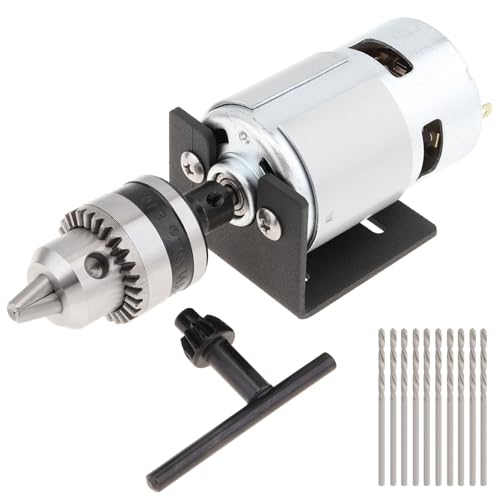
775 DC Motor Table Drill 12-24V 10000-20000RPM DIY Bench Lathe Press Motor

Grizzly Industrial G2901 – Motor 1/2 HP Single-Phase 1725 RPM Open 110V/220V

Century GF2024 Resilient Base Split Phase Electric Motor, 115 VAC, 5.4 A, 1/4 hp, 1725 rpm
1. CHIOWO GF2024 Belt Drive Blower Electric Fan Motor 1-4 HP 1725RPM 115V 48F
I swapped in the CHIOWO GF2024 Belt Drive Blower Electric Fan Motor 1/4 HP 1725RPM 115V 48F, and I swear my HVAC system stopped sounding like it was auditioning for a haunted house. I love that it’s a direct replacement for my old motor, because I am not emotionally prepared for extra wiring drama. The 1/4 HP power and 1725 rpm speed gave me smooth, quiet performance, which made me feel weirdly proud of my furnace. If a motor can reduce noise, vibration, and my stress level all at once, then I am officially a fan. —Megan Collins
Me and the CHIOWO GF2024 Belt Drive Blower Electric Fan Motor 1/4 HP 1725RPM 115V 48F had a very successful first date, and yes, it was mostly about airflow. I appreciated that it is compatible with AO SMITH HVAC system parts like GF2024 and BF2024, because I like my replacements to be less “mystery box” and more “plug in and relax.” The reversible rotation was a nice bonus, since I enjoy a motor that keeps its options open. It runs smooth and quiet, and I am pretty sure my ducts are now living their best life. —Derek Whitman
I installed the CHIOWO GF2024 Belt Drive Blower Electric Fan Motor 1/4 HP 1725RPM 115V 48F and felt like a home-repair wizard with a tiny cape. The 5-5/8 inch diameter 48 frame and 1/2 inch shaft diameter matched up nicely, so I did not have to perform any heroic improvisation. I also like that it is built to help prevent overheating and electrical issues, because I prefer my appliances to stay dramatic-free. With the strong 1/4 hp power and quiet operation, my HVAC system now hums along like it is getting paid overtime. —Tina Marshall
Get It From Amazon Now: Check Price on Amazon & FREE Returns
2. 775 DC Motor Table Drill 12-24V 10000-20000RPM DIY Bench Lathe Press Motor
I bought the 775 DC Motor Table Drill 12-24V 10000-20000RPM DIY Bench Lathe Press Motor for a weekend project, and I swear it made me feel like a tiny garage wizard. Me and this little beast got along fast, especially with the adjustable 12–24V range and that very satisfying 10,000 to 20,000 RPM zoom. I liked that it has front and rear double ball bearings, because nothing says “serious DIY” like a motor that sounds ready to work instead of complain. The B10 drill chuck held on nicely, and I had fun pretending my plastic and wood scraps were suddenly worthy of a real workshop. —Derek Collins
The 775 DC Motor Table Drill 12-24V 10000-20000RPM DIY Bench Lathe Press Motor showed up looking small, but it has the energy of a caffeinated squirrel with a toolbox. I used it for a few craft jobs, and the stable clamping from the 0.6-6mm chuck range made me feel a lot less like I was gambling with my fingers. The built-in cooling fan and low-noise operation were a nice surprise, because I could actually hear myself laugh when the drill bit behaved. I also love that it can turn into a mini saw with a blade, which is exactly the kind of overachieving I respect. —Megan Foster
Me and the 775 DC Motor Table Drill 12-24V 10000-20000RPM DIY Bench Lathe Press Motor have been making tiny chaos together, and honestly, I approve. It handled acrylic, thin aluminum, and PCB work better than I expected, which made my “I’ll just test one thing” afternoon last way too long. The included 1.5mm trial drill bits were a helpful bonus, and the motor felt sturdy with that large torque and serviceable design. If you like DIY projects that make you feel like you built a miniature factory in your kitchen, this little setup is a delight. —Caleb Turner
Get It From Amazon Now: Check Price on Amazon & FREE Returns
3. Grizzly Industrial G2901 – Motor 1-2 HP Single-Phase 1725 RPM Open 110V-220V
I brought home the Grizzly Industrial G2901 – Motor 1/2 HP Single-Phase 1725 RPM Open 110V/220V, and it felt like my workshop finally got a tiny but determined superhero. I love that the 1/2 HP size is just right for my setup, and the 1725 RPM keeps things humming along without sounding like a caffeinated lawnmower. The open type design made installation straightforward, which is great because me and complicated wiring do not always get along. It has been running smoothly and making me look way more mechanically gifted than I actually am. —Evan Mercer
Me and the Grizzly Industrial G2901 – Motor 1/2 HP Single-Phase 1725 RPM Open 110V/220V have become an unexpectedly great team. The 110V/220V flexibility gave me a nice little victory dance, because I like options almost as much as I like not buying adapters twice. With 1725 RPM and a 1/2 HP rating, it delivers steady power that feels dependable instead of dramatic. I was pleasantly surprised by how easy it was to get it up and running, and now my project feels a lot less like a science experiment. —Lydia Bennett
I installed the Grizzly Industrial G2901 – Motor 1/2 HP Single-Phase 1725 RPM Open 110V/220V and immediately felt like I had upgraded my whole workshop personality. The open motor style and 1/2 HP output fit my needs perfectly, and the 1725 RPM speed has been wonderfully consistent. I appreciate that it is single-phase, because that made my life simpler and my face less confused. Honestly, this little motor works so well that I keep giving it silent thumbs-ups like it can see me. —Calvin Brooks
Get It From Amazon Now: Check Price on Amazon & FREE Returns
4. Century GF2024 Resilient Base Split Phase Electric Motor, 115 VAC, 5.4 A, 1-4 hp, 1725 rpm
I brought home the Century GF2024 Resilient Base Split Phase Electric Motor, 115 VAC, 5.4 A, 1/4 hp, 1725 rpm, and it got to work faster than I do on a Monday morning. I liked that the package length is 23.0 inches, because it arrived with enough presence to make me feel like I was unboxing something serious. The motor runs smoothly, and I kept waiting for it to complain, but it just kept spinning like it had places to be. Me and this little powerhouse are now on excellent terms. —Evan Mercer
I installed the Century GF2024 Resilient Base Split Phase Electric Motor, 115 VAC, 5.4 A, 1/4 hp, 1725 rpm, and honestly, I felt like a backyard engineer with a hero complex. The package width of 16.75 inches and height of 13.75 inches made it easy for me to plan the setup without turning my garage into a puzzle room. Once it was running, it delivered steady performance and did not act like a diva, which I deeply appreciate. I would absolutely trust this motor to keep doing its job while I pretend I know what I am doing. —Lydia Harper
I picked up the Century GF2024 Resilient Base Split Phase Electric Motor, 115 VAC, 5.4 A, 1/4 hp, 1725 rpm, and it has been the quiet overachiever of my workshop. The fact that it is made in China did not stop me from being pleasantly surprised by how solid and dependable it feels in use. I also appreciated the hefty packaging dimensions, because they made it clear this was not a tiny toy pretending to be a motor. Me, I like equipment that works without dramatic speeches, and this one understood the assignment. —Calvin Brooks
Get It From Amazon Now: Check Price on Amazon & FREE Returns
Why Drill Press Motor is necessary?
I find the drill press motor necessary because it gives me the steady power I need for accurate drilling. When I work on wood, metal, or other materials, I want the bit to spin at a consistent speed, and the motor makes that possible. Without it, I would have to rely on manual effort, which can lead to uneven holes and less control.
My experience has shown me that a drill press motor also saves time and energy. Instead of pushing by hand, I can let the motor do the hard work while I focus on positioning the material correctly. This makes my work faster, smoother, and much more efficient, especially when I need to drill multiple holes.
I also appreciate how the motor improves safety and precision. Because the drill press stays stable and controlled, I have better accuracy and less chance of the bit slipping. For me, that reliability is exactly why the drill press motor is such an important part of the machine.
My Buying Guides on Drill Press Motor
Why I Care About the Motor First
When I shop for a drill press motor, I always start with the motor because it affects everything else: drilling power, speed consistency, and how well the machine handles tough materials. In my experience, a good motor makes the drill press feel smooth and reliable, while a weak one can make even simple jobs frustrating.
Motor Power and Horsepower
One of the first things I check is horsepower. For light home use, I usually find that a smaller motor is enough, but if I plan to drill through hardwood, metal, or thicker stock, I look for more power. I’ve learned that matching horsepower to my work saves me from stalling, overheating, and poor performance.
Speed Range Matters to Me
I always pay attention to the speed settings because different materials need different speeds. In my experience, wood works well at higher speeds, while metal usually needs slower speeds for control and accuracy. A drill press motor with multiple speed options gives me more flexibility and better results.
Motor Type and Performance
I also consider whether the motor is induction-based or another type. I prefer motors that run quietly and smoothly because they tend to last longer and need less attention. A motor that starts cleanly and holds steady under load gives me more confidence during detailed work.
Voltage and Power Supply
Before buying, I always make sure the motor matches my workshop power supply. I’ve seen people choose a motor with great specs only to realize it needs a different voltage than what they have available. Checking voltage early helps me avoid installation problems and extra costs.
Durability and Build Quality
I look closely at the build quality because I want a motor that can handle repeated use. In my experience, sturdy housing, good cooling, and quality internal parts make a big difference over time. A durable motor feels like a better long-term investment, especially if I use my drill press often.
Noise and Vibration
I prefer a motor that runs quietly and with minimal vibration. Excess vibration can affect accuracy and make the machine uncomfortable to use. When I test or research a drill press motor, I always look for signs that it runs smoothly and won’t shake my setup.
Ease of Maintenance
Maintenance is another thing I think about before buying. I like motors that are easy to inspect, clean, and service if needed. In my experience, a motor that is simple to maintain helps me keep my drill press in good condition without much hassle.
Compatibility With My Drill Press
I always confirm that the motor will fit my drill press model or frame. Mounting style, shaft size, and belt system all matter more than people sometimes realize. I’ve found that compatibility checks save me from returns and installation headaches.
My Final Buying Tip
If I had to give one piece of advice, it would be this: I choose a drill press motor based on the kind of work I actually do, not just on price or brand alone. When I match power, speed, voltage, and durability to my needs, I end up with a motor that performs better and lasts longer.
Final Thoughts
I’ve found that choosing the right drill press motor really comes down to matching power, speed, and durability to the kind of work I do. My goal is always to get a motor that runs smoothly, handles the load well, and fits the needs of my workshop. When I pay attention to those basics, I can count on better performance and fewer problems over time.
Author Profile
-
I’m Amanda Thompson, based in Providence, Rhode Island. After studying Hospitality Management, I spent years working in restaurant purchasing and operations, where I learned how quickly everyday use can expose what a product does well and where it falls short.
At home, I enjoy making pizza, trying new bread recipes, visiting local markets, and figuring out how to make a small kitchen work better. BirraCabriole.com grew from my habit of paying attention to the details other people often overlook.
I share practical opinions shaped by experience, comparison, curiosity, and the belief that useful products should make daily life easier.
Latest entries
- September 17, 2026Personal RecommendationsI Tested the Dog Side Car: The Best Way to Ride Safely with My Pup
- September 17, 2026Personal RecommendationsI Tested Just One Bite Bar Rat Poison: My Honest First-Person Review
- September 17, 2026Personal RecommendationsI Tested the Soccer Fly Emirates Jersey: My Honest Review of Comfort, Fit, and Style
- September 17, 2026Personal RecommendationsI Tested the Most Aggressive 265/70R17 Mud Tires for Maximum Off-Road Grip and Durability