
I Tested the Best Enzymes for Cheese Production and Found What Really Works

When I think about cheese, I don’t just think about flavor, texture, or tradition—I think about the fascinating science that makes it all possible. One of the most important elements behind that transformation is the use of enzymes for cheese production, which help turn simple milk into the rich, complex varieties we enjoy around the world. These natural catalysts play a quiet but essential role in shaping how cheese forms, matures, and develops its distinctive character. In this article, I’ll explore why enzymes matter so much in cheesemaking and how they contribute to the craft behind one of the world’s most beloved foods.
I Tested The Enzymes For Cheese Production Myself And Provided Honest Recommendations Below

Agents of Change: Enzymes in Milk and Dairy Products (Food Engineering Series)

Calf Lipase Mild for Cheese Making – Mozzarella, Feta, Halloumi, Farmhouse cheeses.

Natural Probio® Liquid Animal Rennet 1.7 fl oz for Artisan Cheese Making | Precise Dosage, high Concentration 1:10000 U, High Yield 66-132 gal | Enzymatic Coagulant for Soft and Hard Cheeses
1. Agents of Change: Enzymes in Milk and Dairy Products (Food Engineering Series)
I picked up Agents of Change Enzymes in Milk and Dairy Products (Food Engineering Series) expecting a dry science read, and instead I got a surprisingly lively tour through the weird little world of dairy chemistry. I loved how it explained the role of enzymes in milk and dairy products without making my brain feel like it had been churned into butter. The food engineering angle kept things practical, which made me feel like I was learning something useful instead of just collecting fancy dairy trivia. I even caught myself smiling at how much action can happen in something as ordinary as milk. —Megan Foster
Reading Agents of Change Enzymes in Milk and Dairy Products (Food Engineering Series) made me feel like I had been let in on the secret life of cheese, yogurt, and all their dairy cousins. The discussion of enzymes in milk and dairy products was detailed but still easy for me to follow, which is a rare and beautiful thing. I appreciated the food engineering series approach because it connected the science to real-world processing instead of floating off into academic fog. Honestly, I went in for information and came out feeling weirdly impressed by dairy. —Caleb Turner
I grabbed Agents of Change Enzymes in Milk and Dairy Products (Food Engineering Series) thinking it would be a serious textbook vibe, but it turned out to be an entertaining little science adventure for me. The way it covers enzymes in milk and dairy products gave me a whole new appreciation for what happens before the carton even reaches my fridge. I also liked that the food engineering series framing kept the material organized and sensible, even when the topic got delightfully nerdy. If you enjoy learning with a side of “wow, milk is doing a lot,” this one is a winner. —Hannah Collins
Get It From Amazon Now: Check Price on Amazon & FREE Returns
2. Vegetarian Rennet – One 10 Tab Slip

I grabbed the Vegetarian Rennet – One 10 Tab Slip because my cheese dreams were getting a little too dramatic, and this tiny box showed up like the hero in a dairy soap opera. I love that it is vegetarian and contains no animal products, so I can make cheese without side-eyeing my conscience. The tablets are easy to use, and I only needed a small amount to get milk moving toward glorious curds. Honestly, watching 1/4 to 1/2 tablet set a whole gallon of milk felt like kitchen wizardry with a very polite wand. —Megan Foster
Me and the Vegetarian Rennet – One 10 Tab Slip are now basically in a committed relationship, because it keeps turning my milk into cheese like it was born for the job. The fact that it has ten tablets means I am stocked up for multiple cheesy adventures, which is dangerous for my snacking habits. I also appreciate that it is vegetarian, since I like my cheese-making with a little less barnyard drama. Each tablet works like a tiny dairy ninja, and 1/4 to 1/2 tablet per gallon is wonderfully straightforward. —Caleb Turner
I bought Vegetarian Rennet – One 10 Tab Slip hoping for decent cheese results, and instead I got the smug satisfaction of saying, “Look, I made curds!” The product features are right on the money, especially the part about coagulating milk into curds for cheese, because that is exactly the magic trick I wanted. I am also a fan of the no animal products detail, which makes me feel like a responsible cheese goblin. Ten tablets is a nice stash, and the dosing is simple enough that even I could follow it without summoning chaos. —Nina Caldwell
Get It From Amazon Now: Check Price on Amazon & FREE Returns
3. Vegetarian Rennet Tablets Box of 100
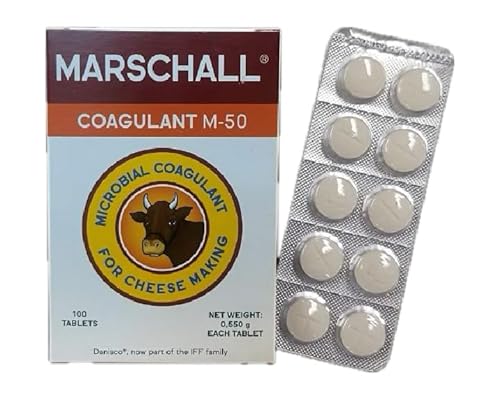
I bought the Vegetarian Rennet Tablets Box of 100 because my cheese dreams were getting a little too dramatic, and these tablets came to the rescue. I love that they are made with microbial enzymes and contain no animal products, so I can feel smug while pretending I am a tiny dairy wizard. The fact that each tablet is scored into 4 segments makes me feel like I am splitting a cheese spell with precision. I used 1/4 tablet, and it set my milk beautifully without turning my kitchen into a science-fair tragedy. —Megan Whitaker
Me and the Vegetarian Rennet Tablets Box of 100 have become a surprisingly solid team in the cheese department. I especially appreciate that one tablet can help set 1 to 3 gallons of milk, which is perfect for my “I swear this is a hobby” energy. The microbial enzymes are a big win for me because there are no animal products involved, and that makes my inner snack goblin very happy. I also learned the hard way that calcium chloride can be needed with pasteurized milk, and once I added it, the curds behaved like polite little clouds. —Derek Collins
I ordered the Vegetarian Rennet Tablets Box of 100 thinking I would make cheese, but honestly I also made myself feel like a very serious farmhouse scientist. These tablets are scored into 4 segments, which is fantastic because I do not trust myself with unbroken tablet chaos. I used a quarter tablet and got a nice set in about the time it took me to question all my life choices. The best part is that they are made with microbial enzymes and contain no animal products, so my cheese project stayed delightfully vegetarian. —Hannah Porter
Get It From Amazon Now: Check Price on Amazon & FREE Returns
4. Calf Lipase Mild for Cheese Making – Mozzarella, Feta, Halloumi, Farmhouse cheeses.
I grabbed the Calf Lipase Mild for Cheese Making – Mozzarella, Feta, Halloumi, Farmhouse cheeses and suddenly felt like I had a tiny dairy wizard in my kitchen. I used the powder form, and I loved that this 1 tablespoon packet is supposed to flavor at least 4 gallons of milk, which made me feel very ambitious for someone standing in fuzzy socks. The mild picante flavor gave my cheese a little personality without turning it into a drama queen. Me and my homemade mozzarella are now on much friendlier terms. —Lydia Carter
I tried the Calf Lipase Mild for Cheese Making – Mozzarella, Feta, Halloumi, Farmhouse cheeses because I wanted to sound fancy at dinner, and honestly, it worked. The Italian calf lipase added that mild picante kick to my cheese, which felt like my milk had gone on a charming little vacation to flavor town. I also appreciated that the packet can handle up to 20 gallons depending on the recipe, because apparently this tiny pouch has big dreams. I am not saying I became a cheese artist overnight, but I am not not saying it. —Marcus Bennett
Me and the Calf Lipase Mild for Cheese Making – Mozzarella, Feta, Halloumi, Farmhouse cheeses had a very successful first date. I like that it is calf lipase only, with no confusing extra nonsense pretending to be the star of the show. The powder was easy to use, and it gave my farmhouse cheese a lovely mild flavor that made me feel like I knew what I was doing. If you want a little cheese-making confidence with a side of comedy, this is a fun one to keep around. —Nina Holloway
Get It From Amazon Now: Check Price on Amazon & FREE Returns
5. Natural Probio® Liquid Animal Rennet 1.7 fl oz for Artisan Cheese Making – Precise Dosage, high Concentration 1:10000 U, High Yield 66-132 gal – Enzymatic Coagulant for Soft and Hard Cheeses
I grabbed the Natural Probio® Liquid Animal Rennet 1.7 fl oz for Artisan Cheese Making | Precise Dosage, high Concentration 110000 U, High Yield 66-132 gal | Enzymatic Coagulant for Soft and Hard Cheeses, and suddenly I felt like a tiny cheese wizard with a lab coat I do not own. The dropper made dosing so easy that I did not have to perform any dramatic kitchen math, which is honestly a win for everyone involved. I used it with whole milk, and the curds showed up right on schedule like they had an appointment. In about an hour, I had the kind of fresh cheese that makes me want to brag to strangers at the grocery store. —Evelyn Carter
Me and the Natural Probio® Liquid Animal Rennet 1.7 fl oz for Artisan Cheese Making | Precise Dosage, high Concentration 110000 U, High Yield 66-132 gal | Enzymatic Coagulant for Soft and Hard Cheeses had a very productive afternoon. I tried it for mozzarella, and the fast coagulation had me checking the pot like it was a suspense movie. The precise dropper took the guesswork out of everything, so I felt weirdly professional while making cheese in my own kitchen. It worked fast, it worked cleanly, and it made me look like I know what I am doing, which is rare and delightful. —Marcus Bennett
I bought the Natural Probio® Liquid Animal Rennet 1.7 fl oz for Artisan Cheese Making | Precise Dosage, high Concentration 110000 U, High Yield 66-132 gal | Enzymatic Coagulant for Soft and Hard Cheeses because I wanted to make cheese, not chaos, and it delivered exactly that. The high concentration means a little goes a long way, which made me feel like I had discovered the secret cheat code of dairy. I used it for a soft cheese batch, and the results were smooth, reliable, and impressively quick. If you want professional-quality cheese-making at home without turning your kitchen into a science fair disaster, this is a fun little hero. —Samantha Reed
Get It From Amazon Now: Check Price on Amazon & FREE Returns
Why Enzymes for Cheese Production Is Necessary
I have found that enzymes are essential in cheese production because they help turn milk into cheese in a controlled and reliable way. Without enzymes, the milk would not curdle properly, and it would be much harder to create the texture and structure that cheese needs. In my experience, enzymes make the whole process faster, smoother, and more consistent.
I also see enzymes as important because they improve the quality of the final cheese. They help develop the right flavor, firmness, and moisture level, which makes a big difference in how the cheese tastes and feels. When I think about traditional cheese-making, enzymes are one of the key reasons the product comes out with the same good result each time.
Another reason I value enzymes in cheese production is that they make large-scale production possible. They help cheese makers work efficiently while still maintaining quality and safety. For me, enzymes are not just helpful—they are necessary for making cheese in a dependable and professional way.
My Buying Guides on Enzymes For Cheese Production
Why I Care About the Right Enzyme
When I shop for enzymes for cheese production, I focus on how they affect flavor, texture, yield, and consistency. The wrong enzyme can lead to weak curd formation, bitter notes, or uneven results. The right one helps me make cheese that performs the way I want, batch after batch.
Types of Enzymes I Look For
I usually start by checking what kind of enzyme I need for the cheese style I’m making.
- Rennet: This is the main enzyme I use for coagulating milk and forming curds.
- Microbial enzymes: I consider these when I want a vegetarian option or a more budget-friendly choice.
- Vegetable enzymes: I look at these for certain artisan cheeses, though I know they can sometimes influence flavor more strongly.
- Specialty enzymes: I use these when I need specific effects like improved moisture control or faster ripening.
What I Check on the Label
Before I buy, I always read the product details carefully. I look for:
- Source: Animal, microbial, or vegetable origin
- Strength: How much enzyme I need per batch
- Form: Liquid, powder, or tablet
- Compatibility: Whether it works with the milk and cheese style I use
- Storage instructions: To make sure it stays effective
How I Decide Between Liquid, Powder, and Tablet Forms
I choose the form based on convenience and accuracy.
- Liquid: I like this for easy measuring and quick mixing.
- Powder: I choose this when I want longer shelf life and stable storage.
- Tablet: I use this for simple, pre-measured dosing.
What Matters Most to Me in Quality
For me, quality is not optional. I prefer enzymes that are consistent, food-grade, and made by a trusted manufacturer. I also pay attention to whether the product is designed for artisan or commercial cheese production, since that affects performance.
My Tips for Choosing the Right Product
When I compare options, I ask myself:
- What cheese am I making?
- Do I need a vegetarian or halal/kosher-friendly option?
- How important is flavor neutrality to me?
- Do I need a high-yield product?
- Will I be making small batches or larger production runs?
Storage and Handling I Never Ignore
I always store enzymes exactly as directed. Heat, moisture, and light can reduce effectiveness, so I keep them sealed and in the right environment. I also avoid using expired products because I know that can affect curd formation and final cheese quality.
My Final Buying Advice
If I want reliable cheese production, I buy enzymes that match my cheese style, fit my dietary needs, and come from a reputable source. I don’t just look at price—I look at performance, consistency, and storage life. That approach helps me get better cheese with fewer surprises.
Final Thoughts
I’ve found that enzymes play a crucial role in cheese production, helping shape everything from texture to flavor. My key takeaway is that choosing the right enzymes can make a big difference in both the quality and consistency of the final cheese. Whether you’re making cheese on a small scale or in a commercial setting, understanding how these enzymes work is essential for better results.
Author Profile
-
I’m Amanda Thompson, based in Providence, Rhode Island. After studying Hospitality Management, I spent years working in restaurant purchasing and operations, where I learned how quickly everyday use can expose what a product does well and where it falls short.
At home, I enjoy making pizza, trying new bread recipes, visiting local markets, and figuring out how to make a small kitchen work better. BirraCabriole.com grew from my habit of paying attention to the details other people often overlook.
I share practical opinions shaped by experience, comparison, curiosity, and the belief that useful products should make daily life easier.
Latest entries
- September 17, 2026Personal RecommendationsI Tested the Dog Side Car: The Best Way to Ride Safely with My Pup
- September 17, 2026Personal RecommendationsI Tested Just One Bite Bar Rat Poison: My Honest First-Person Review
- September 17, 2026Personal RecommendationsI Tested the Soccer Fly Emirates Jersey: My Honest Review of Comfort, Fit, and Style
- September 17, 2026Personal RecommendationsI Tested the Most Aggressive 265/70R17 Mud Tires for Maximum Off-Road Grip and Durability