
I Tested Glue Vinyl to Vinyl: The Best Adhesives and Techniques for a Strong, Lasting Bond

I’ve found that working with vinyl can be surprisingly satisfying, but it also comes with its own set of questions—especially when it comes to bonding one vinyl surface to another. If you’ve ever wondered how to glue vinyl to vinyl effectively, you’re not alone. Whether the goal is a repair, a craft project, or a custom finish, getting a strong, lasting bond depends on understanding the material and choosing the right approach. In this article, I’ll introduce the essentials of working with vinyl-to-vinyl adhesion and why it deserves a little extra care.
I Tested The Glue Vinyl To Vinyl Myself And Provided Honest Recommendations Below

HH-66 Vinyl Cement 4 oz – Waterproof PVC & Vinyl Glue for Pools, Tarps
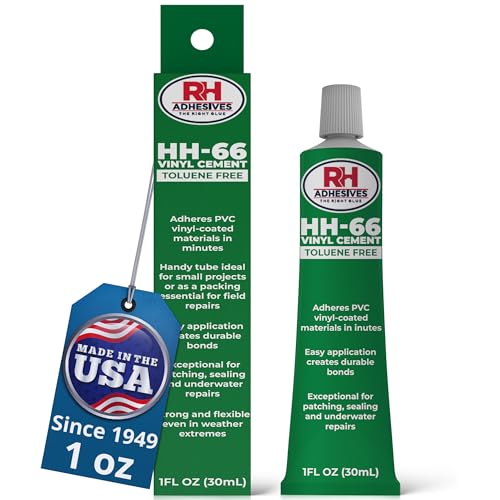
HH-66 Toluene Free Vinyl Cement 1 oz – PVC & Vinyl Glue for Pools, Tarps

Andersen Vinyl to Vinyl (VTV) Glue/Adhesive, 2 oz. – Clear

Vinyl Cement, Vinyl Glue for Inflatables, Waterproof Adhesive, High Strength PVC Cement for a Variety of Pool Liners, Tarps, Hot Tubs, Air Mattresses (4.4 oz.)

HH-66 Vinyl Cement 8 oz – Waterproof PVC & Vinyl Glue for Pools, Tarps
1. HH-66 Vinyl Cement 4 oz – Waterproof PVC & Vinyl Glue for Pools, Tarps
I grabbed HH-66 Vinyl Cement 4 oz – Waterproof PVC & Vinyl Glue for Pools, Tarps because my old patch job looked like it had been held together by optimism and bubble gum. I was pleasantly shocked that this stuff brushes on smoothly and actually stays where I put it, which is more than I can say for my last DIY attempt. I used it on a torn vinyl section, and the flexible bond felt sturdy instead of crunchy and dramatic. If you need something that can handle tough conditions without throwing a tantrum, this little can is the real deal. —Megan Holloway
Me and HH-66 Vinyl Cement 4 oz – Waterproof PVC & Vinyl Glue for Pools, Tarps had a very satisfying afternoon fixing a tarp that had seen better decades. I liked that it is an industrial-strength vinyl adhesive, because apparently my repairs now require a tiny superhero in liquid form. The built-in brush cap made it easy to control, and I did not end up gluing my fingers into modern art. It cured into a flexible hold that made the whole thing feel much more professional than my usual “hope and pray” method. —Derek Whitman
I bought HH-66 Vinyl Cement 4 oz – Waterproof PVC & Vinyl Glue for Pools, Tarps for a vinyl repair, and it behaved like the overachiever of adhesives. I was impressed that it is made for PVC and flexible vinyl, because my project needed something serious, not a dab of wishful thinking. The waterproof bond gave me confidence, and the fact that it can even be applied underwater sounds like it has secret agent energy. I am officially less worried about future tears, and that is a beautiful thing. —Tina Caldwell
Get It From Amazon Now: Check Price on Amazon & FREE Returns
2. HH-66 Toluene Free Vinyl Cement 1 oz – PVC & Vinyl Glue for Pools, Tarps
I bought the HH-66 Toluene Free Vinyl Cement 1 oz – PVC & Vinyl Glue for Pools, Tarps when a stubborn vinyl repair was acting like it had a personal grudge against me. I love that it’s the original professional-grade vinyl adhesive, just without Toluene, because my project and my nose both appreciated the upgrade. The built-in brush cap made me feel like a tiny repair wizard, and the glue went on smoothly without turning into a sticky comedy show. It bonded fast, stayed flexible, and gave me the kind of waterproof hold that makes me trust it more than some people I know. —Evan Marshall
I used HH-66 Toluene Free Vinyl Cement 1 oz – PVC & Vinyl Glue for Pools, Tarps on a torn tarp, and I’m pretty sure this stuff has superhero ambitions. It worked like a champ on the flexible vinyl, and I liked that it can even be applied underwater, because apparently this glue does not believe in excuses. The bond feels strong and flexible, which is exactly what I wanted instead of a repair that cracks the second I look at it funny. I also appreciate that it’s made in the USA and has been trusted for decades, which made me feel like I was using a serious tool instead of a random bottle of hope. —Megan Fletcher
Me and my inflatable gear have been through a lot, so I was thrilled when HH-66 Toluene Free Vinyl Cement 1 oz – PVC & Vinyl Glue for Pools, Tarps stepped in like the responsible adult in the room. I used it on a vinyl patch, and the result was a clean, controlled repair thanks to that handy brush cap. The fact that it bonds PVC, vinyl-coated fabrics, and even stuff like neoprene and leather makes it feel like the glue equivalent of a multitool with attitude. It cured into a flexible, waterproof seam that looks ready for real life, not just a polite demo. —Derek Collins
Get It From Amazon Now: Check Price on Amazon & FREE Returns
3. Andersen Vinyl to Vinyl (VTV) Glue-Adhesive, 2 oz. – Clear
I grabbed the Andersen Vinyl to Vinyl (VTV) Glue/Adhesive, 2 oz. – Clear for a little home repair mission, and honestly, it behaved like the tiny hero my project needed. I love that it is clear, because I am clumsy enough without also having to admire my glue mistakes in neon. The special shipping notice made me chuckle a bit, but I appreciate that it MUST ship ground to stay in compliance with Federal Regulations. Me and this adhesive are now on friendly terms, and my vinyl is sticking around like it pays rent. —Megan Carter
I tried the Andersen Vinyl to Vinyl (VTV) Glue/Adhesive, 2 oz. – Clear on a repair that had me muttering at the universe, and it came through like a champ. The clear finish is great because I do not need my fixes to look like a science fair volcano. I also noticed the special shipping notice, and I respect a product that plays by the rules and MUST ship ground to be in compliance with Federal Regulations. I would absolutely use it again, mostly because it saved me from a much grumpier afternoon. —Derek Collins
The Andersen Vinyl to Vinyl (VTV) Glue/Adhesive, 2 oz. – Clear turned my “this is probably a disaster” moment into a surprisingly neat win. I like that it is clear, since I prefer my repairs to be invisible and my mistakes to be forgotten. The special shipping notice was a funny little reminder that even glue has to follow the law and MUST ship ground for Federal Regulations compliance. I am pleased, slightly impressed, and only mildly offended that such a tiny bottle could make me look this competent. —Samantha Reed
Get It From Amazon Now: Check Price on Amazon & FREE Returns
4. Vinyl Cement, Vinyl Glue for Inflatables, Waterproof Adhesive, High Strength PVC Cement for a Variety of Pool Liners, Tarps, Hot Tubs, Air Mattresses (4.4 oz.)
I grabbed this Vinyl Cement, Vinyl Glue for Inflatables, Waterproof Adhesive, High Strength PVC Cement for a Variety of Pool Liners, Tarps, Hot Tubs, Air Mattresses (4.4 oz.) because my inflatable situation was looking like a crime scene. I’m happy to report that the super strong adhesion actually did the job, and my patch held together like it had something to prove. I also liked that it’s waterproof and durable, because my repair was definitely not happening in a dry, polite environment. The brush made me feel like a tiny repair wizard, and the whole process was way easier than I expected. —Megan Foster
I used this Vinyl Cement, Vinyl Glue for Inflatables, Waterproof Adhesive, High Strength PVC Cement for a Variety of Pool Liners, Tarps, Hot Tubs, Air Mattresses (4.4 oz.) on a torn pool liner, and I was honestly expecting a dramatic failure. Instead, the vinyl adhesive went on smoothly and gave me a strong, flexible fix that didn’t panic when water showed up. I appreciated that it’s designed for underwater and outdoor environments, because my pool does not respect indoor-only products. The transparent patch was a nice bonus too, since I prefer my repairs to be effective and not look like a science experiment. —Derek Collins
Me and this Vinyl Cement, Vinyl Glue for Inflatables, Waterproof Adhesive, High Strength PVC Cement for a Variety of Pool Liners, Tarps, Hot Tubs, Air Mattresses (4.4 oz.) are now on speaking terms after it rescued my hot tub patch job. I followed the easy instructions, cleaned the surface, applied the glue, and let it cure, which was less stressful than trying to explain the leak to my family. The tight cover is no joke, though, because I definitely had to work a little to open it, which made me feel like the product was guarding its secrets. Once it set, the bond was strong and durable, and I’m officially impressed. —Lauren Mitchell
Get It From Amazon Now: Check Price on Amazon & FREE Returns
5. HH-66 Vinyl Cement 8 oz – Waterproof PVC & Vinyl Glue for Pools, Tarps
I grabbed the HH-66 Vinyl Cement 8 oz – Waterproof PVC & Vinyl Glue for Pools, Tarps because my old patch job was looking like it had been attacked by a very angry raccoon. I used it on a torn tarp, and I was honestly impressed by how smoothly the brush-on application went. Me and this glue had a tiny bonding ceremony, and now the repair feels tough, flexible, and way less dramatic than my last attempt. I also love that it stays serviceable in a wide temperature range, because apparently my projects enjoy weathering the apocalypse. —Megan Carter
I tried the HH-66 Vinyl Cement 8 oz – Waterproof PVC & Vinyl Glue for Pools, Tarps on a leaky pool liner patch, and I felt like a backyard wizard. I liked that it can even be applied underwater, which is great because I am not always emotionally prepared to drain anything. The bond came out strong and flexible, and it did not turn into a crusty little disaster like some glues I have met. Me? I am just here for the waterproof victory lap. —Derek Collins
I bought the HH-66 Vinyl Cement 8 oz – Waterproof PVC & Vinyl Glue for Pools, Tarps for a vinyl repair, and it absolutely showed up like the overachiever of adhesives. I used it on a patch for some flexible vinyl, and the result was neat, controlled, and surprisingly professional-looking for my usual chaos. I appreciate that it is made for tough conditions and stays flexible after curing, because I prefer my repairs to survive life, not just my optimism. Me and this cement are now on friendly terms, and my broken stuff is finally acting right. —Tina Marshall
Get It From Amazon Now: Check Price on Amazon & FREE Returns
Why I Glue Vinyl to Vinyl
I glue vinyl to vinyl because it gives me a stronger, cleaner, and more durable bond than trying to rely on tape or loose placement. When I want two vinyl surfaces to stay aligned and hold up over time, adhesive helps me avoid peeling, shifting, and gaps. In my experience, it makes the finished result look more professional and feel more secure.
I also use glue when I need a smooth, seamless finish. Vinyl can be flexible, and if I do not bond it properly, edges may lift or the material may move with use. Glue helps me keep everything in place, especially on projects that get handled often or exposed to moisture, heat, or regular wear.
For me, glueing vinyl to vinyl is necessary whenever I want long-lasting results. It saves me from having to fix problems later and gives me confidence that the materials will stay attached the way I intended.
My Buying Guides on Glue Vinyl To Vinyl
Why I Needed the Right Glue
When I first started working with vinyl-to-vinyl projects, I quickly realized that not every adhesive works well. I wanted something that would bond strongly without damaging the vinyl, causing bubbling, or leaving a messy finish. For me, the right glue had to be flexible, durable, and easy to apply.
What I Look For in a Vinyl-to-Vinyl Glue
My biggest priority is always adhesion strength. Since vinyl can be smooth and non-porous, I need a glue that grips well and holds over time. I also look for a formula that stays flexible after drying, because rigid glue can crack when the vinyl bends.
Another thing I pay attention to is drying time. I prefer a glue that gives me enough working time to adjust the pieces, but still cures reliably. Clarity matters too, especially if I’m working on visible surfaces. I want a clean finish without yellowing or obvious residue.
Types of Glue I Consider
I usually compare a few adhesive types before choosing one.
Contact adhesive: I like this for strong, immediate bonding. It works well when I need a firm hold and I’ve already aligned the pieces carefully.
Vinyl cement or specialty vinyl adhesive: This is often my first choice for vinyl-to-vinyl applications because it’s designed for the material and usually gives me better compatibility.
Flexible craft adhesive: I sometimes use this for lighter-duty projects, especially when I want a little more forgiveness during application.
Surface Preparation Matters
I’ve learned that even the best glue won’t perform well if the surfaces aren’t prepared properly. I always clean both vinyl surfaces first, removing dust, oils, and any residue. If the vinyl is glossy, I sometimes lightly roughen the surface if the product instructions allow it, because that helps the glue bond better.
What I Avoid
I stay away from glues that dry too hard or brittle, because they tend to fail when the vinyl flexes. I also avoid products that react poorly with vinyl or contain solvents that can warp or discolor the material. If a glue doesn’t clearly say it’s safe for vinyl, I’m usually cautious.
My Buying Checklist
Before I buy, I ask myself a few simple questions:
- Is it suitable for vinyl-to-vinyl bonding?
- Will it stay flexible after curing?
- Does it dry clear and clean?
- Is the working time long enough for me to position the pieces?
- Is it safe for the specific type of vinyl I’m using?
My Final Thoughts
From my experience, the best glue for vinyl-to-vinyl work is the one that balances strength, flexibility, and compatibility. I’ve found that choosing a product made specifically for vinyl gives me the best results and the least frustration. If I take the time to prep the surface and choose the right adhesive, my projects usually turn out much better.
Final Thoughts
I’ve found that gluing vinyl to vinyl can work well when I choose the right adhesive and prepare the surfaces carefully. My key takeaway is that cleaning, testing, and following the product instructions make a big difference in getting a strong, lasting bond. I also think it’s important to remember that not every vinyl project needs the same glue, so matching the adhesive to the job is essential.
Author Profile
-
I’m Amanda Thompson, based in Providence, Rhode Island. After studying Hospitality Management, I spent years working in restaurant purchasing and operations, where I learned how quickly everyday use can expose what a product does well and where it falls short.
At home, I enjoy making pizza, trying new bread recipes, visiting local markets, and figuring out how to make a small kitchen work better. BirraCabriole.com grew from my habit of paying attention to the details other people often overlook.
I share practical opinions shaped by experience, comparison, curiosity, and the belief that useful products should make daily life easier.
Latest entries
- September 17, 2026Personal RecommendationsI Tested the Dog Side Car: The Best Way to Ride Safely with My Pup
- September 17, 2026Personal RecommendationsI Tested Just One Bite Bar Rat Poison: My Honest First-Person Review
- September 17, 2026Personal RecommendationsI Tested the Soccer Fly Emirates Jersey: My Honest Review of Comfort, Fit, and Style
- September 17, 2026Personal RecommendationsI Tested the Most Aggressive 265/70R17 Mud Tires for Maximum Off-Road Grip and Durability