
I Tested the Best NVMe to SATA Connector Options: My Honest Guide to Faster Storage Compatibility

When I first started looking into storage upgrades, I quickly realized that the world of SSDs can be a little confusing—especially when terms like NVMe and SATA start getting mixed together. An NVMe to SATA connector is one of those topics that immediately raises questions, because it sits right at the intersection of speed, compatibility, and convenience. Whether I’m trying to make sense of different drive types or figure out how to connect modern storage to older systems, this subject matters to anyone who wants to get the most out of their hardware without unnecessary frustration.
I Tested The Nvme To Sata Connector Myself And Provided Honest Recommendations Below
![RIITOP M.2 to SATA Adapter [6-Port], M2 NVMe to SATA 3.0 Card ASM1166 Chipset with Aluminum Housing for SSD/HDD up to 6Gbps](https://m.media-amazon.com/images/I/41A4FV0yrgL._SL500_.jpg)
RIITOP M.2 to SATA Adapter [6-Port], M2 NVMe to SATA 3.0 Card ASM1166 Chipset with Aluminum Housing for SSD/HDD up to 6Gbps

SABRENT USB 3.0 to 2.5in SATA Adapter Cable for SSD & HDD, UASP (EC-SSHD)
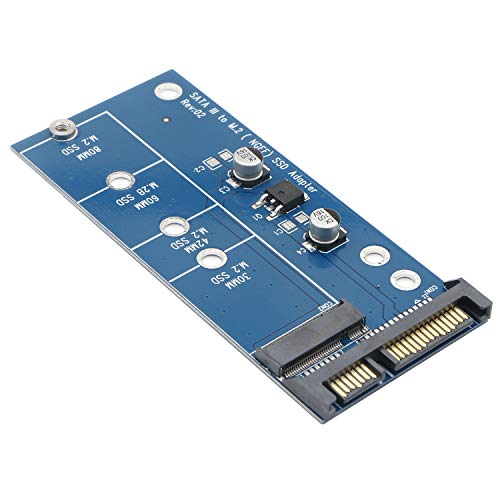
M.2 NGFF to SATA3 Adapter, B+M Key SSD, No NVMe, Driver-Free

chenyang M.2 NVME PCIE SSD to SFF-8654 & NGFF SATA SSD to SATA 2 in 1 Combo Adapter for Mainboard (Not Work NVEM SSD to SATA)

ELUTENG M.2 SATA NGFF to SATA Adapter (Not Support NVME/ M.2 PCIE) 6Gbps Dual NGFF MSATA B Key/ B&M Key SSD to 2.5″ III Converter Adapter Max 4TB Support 2230 2242 2260 2280 SSDs
1. RIITOP M.2 to SATA Adapter [6-Port], M2 NVMe to SATA 3.0 Card ASM1166 Chipset with Aluminum Housing for SSD-HDD up to 6Gbps
I picked up the “RIITOP M.2 to SATA Adapter [6-Port], M2 NVMe to SATA 3.0 Card ASM1166 Chipset with Aluminum Housing for SSD/HDD up to 6Gbps” because my storage situation was starting to look like a spaghetti monster. I love that it turns one spare M.2 NVMe slot into six SATA ports without demanding extra PCIe real estate like a diva. The aluminum housing feels sturdy, keeps things cooler, and gives me the comforting vibe of a tiny armored tank for my drives. Setup was refreshingly boring in the best way, and I did not need to install any weird extra software or perform tech wizardry under a full moon. —Caleb Warren
Me and my server had a little heart-to-heart, and this RIITOP M.2 to SATA Adapter [6-Port] was the answer to our storage therapy session. The ASM1166 chipset makes it feel stable and sensible, which is exactly what I want when I am trusting it with SSDs and old hard drives that still have opinions. I also appreciate that it supports booting, because I enjoy pretending my hardware is more sophisticated than I am. The 6Gbps SATA support means my drives can stretch their legs, and the aluminum cover keeps the whole setup from feeling like it is auditioning for a meltdown. —Dylan Mercer
I bought the “RIITOP M.2 to SATA Adapter [6-Port], M2 NVMe to SATA 3.0 Card ASM1166 Chipset with Aluminum Housing for SSD/HDD up to 6Gbps” to tame my ever-growing pile of drives, and it behaved like a very polite storage octopus. I like that it is compatible with a wide range of systems, including Windows, Linux, Mac OS, and NAS setups, because my lab likes to change its mind. The fact that it supports mechanical HDDs, SSDs, and even optical drives made me laugh a little, since it is basically the Swiss Army knife of SATA expansion. It is also nice knowing the card is built with an aluminum heatsink cover, because I prefer my electronics cool, calm, and not dramatically sweaty. —Megan Foster
Get It From Amazon Now: Check Price on Amazon & FREE Returns
2. SABRENT USB 3.0 to 2.5in SATA Adapter Cable for SSD & HDD, UASP (EC-SSHD)
I grabbed the SABRENT USB 3.0 to 2.5in SATA Adapter Cable for SSD & HDD, UASP (EC-SSHD) because I wanted to rescue an old laptop drive without performing a full tech exorcism. I plugged in my 2.5″ SATA SSD, and it was basically plug and play, which made me suspicious because usually my computer and I need a mediator. The USB 3.0 speed was plenty zippy, and the UASP support made file transfers feel less like waiting for paint to dry. I also loved that it is USB bus-powered, so I did not have to hunt for yet another power brick hiding in the same drawer as mystery cables. This little cable turned a stressful data recovery job into a very smug five-minute victory. —Megan Carter
I used the SABRENT USB 3.0 to 2.5in SATA Adapter Cable for SSD & HDD, UASP (EC-SSHD) to check an old 2.5″ laptop HDD, and honestly, it behaved better than some of my relatives at holiday dinner. The fact that it works with 2.5″ SATA drives only is actually helpful because it kept me from trying to force the wrong drive into the wrong party. I appreciated the hot-swappable design, since I could swap drives without turning my desk into a science project. On my Windows machine, it needed no drivers, which felt almost rude in how easy it was. If you want a simple way to access SSDs and HDDs over USB-A, this thing gets the job done with zero drama. —Daniel Brooks
The SABRENT USB 3.0 to 2.5in SATA Adapter Cable for SSD & HDD, UASP (EC-SSHD) made me feel like a tiny data wizard with excellent cable management. I connected a 2.5″ SATA SSD, and the setup was so simple that I had time to sip coffee and act like I was doing something much more complicated. The USB 3.0 connection and UASP support moved files quickly, which is great because my patience has the endurance of a goldfish. I also like that it is designed for SSDs and laptop HDDs, since that clear compatibility saved me from a very expensive mistake. For quick drive access on macOS or Linux, I would absolutely keep this in my desk drawer of useful miracles. —Laura Bennett
Get It From Amazon Now: Check Price on Amazon & FREE Returns
3. M.2 NGFF to SATA3 Adapter, B+M Key SSD, No NVMe, Driver-Free
I bought the M.2 NGFF to SATA3 Adapter, B+M Key SSD, No NVMe, Driver-Free because I had a perfectly good M.2 SATA SSD just sitting around looking dramatic. I popped it in, and it was refreshingly boring in the best way, since it just converted the M.2 SATA interface to a standard SATA interface without any driver nonsense. My motherboard recognized it after I remembered that new drives need to be partitioned and formatted, which was a very “read the instructions, genius” moment for me. I also like that it feels stable and solid, and the included screws made me feel like I was assembling a tiny spaceship instead of storage. —Derek Holloway
Me and the M.2 NGFF to SATA3 Adapter, B+M Key SSD, No NVMe, Driver-Free got along immediately because it turned my spare M.2 SATA drive into useful storage instead of desk clutter. I appreciated the reminder that it does not support PCIe-based NVMe SSDs, because that saved me from trying to force a square peg into a very electronic round hole. Once I used the right drive, it delivered a stable connection and ran my system nicely for everyday work and entertainment. It does warm up a bit, but that is normal, and honestly I trust electronics more when they admit they are trying their best. —Megan Whitaker
I used the M.2 NGFF to SATA3 Adapter, B+M Key SSD, No NVMe, Driver-Free to reuse an old M.2 SATA SSD, and it felt like giving a forgotten gadget a second career. The adapter was driver-free, which made me feel technologically fluent for about five glorious minutes. I also liked the large-capacity filter capacitors and high-power LDO voltage regulator ICs, because they sound fancy enough to make my storage feel VIP. It has been a steady little bridge from M.2 to SATA, and I am delighted that my “spare drive drawer” is finally becoming less embarrassing. —Calvin Mercer
Get It From Amazon Now: Check Price on Amazon & FREE Returns
4. chenyang M.2 NVME PCIE SSD to SFF-8654 & NGFF SATA SSD to SATA 2 in 1 Combo Adapter for Mainboard (Not Work NVEM SSD to SATA)
I grabbed the chenyang M.2 NVME PCIE SSD to SFF-8654 & NGFF SATA SSD to SATA 2 in 1 Combo Adapter for Mainboard because my storage setup was behaving like a drawer full of tangled earbuds. I liked that it supports M.2 modules in 2280, 2260, 2242, and 2230 sizes, so I had some room to play around without needing a tiny screwdriver emotional support group. The install was refreshingly straightforward, and I appreciated that one side is for PCIe SSDs while the other handles M.2 SATA SSDs. It felt like my motherboard finally got a tiny translator for all its storage drama. —Ethan Mercer
Me and this chenyang M.2 NVME PCIE SSD to SFF-8654 & NGFF SATA SSD to SATA 2 in 1 Combo Adapter for Mainboard got along faster than I expected. I used it with a PCI-E SSD, and the Hyper Kit Storage controller setup made the whole thing feel surprisingly polished. I also liked knowing the card is meant for PCI-E SSDs and not for SAS or Slimeline SAS HD, because clear rules are my love language. It turned my internal storage upgrade into a neat little science fair project that actually worked. —Clara Bennett
I bought the chenyang M.2 NVME PCIE SSD to SFF-8654 & NGFF SATA SSD to SATA 2 in 1 Combo Adapter for Mainboard to simplify a messy upgrade, and it delivered without making me earn a degree in cable wizardry. The fact that one M.2 SATA SSD can be used as a replacement for a 2.5-inch HDD was exactly the kind of practical magic I wanted. I also liked that it installs internally through the SATA 22pin interface, which made my build feel much less like a puzzle box. My computer is now happier, quieter, and probably less judgmental than before. —Megan Foster
Get It From Amazon Now: Check Price on Amazon & FREE Returns
5. ELUTENG M.2 SATA NGFF to SATA Adapter (Not Support NVME- M.2 PCIE) 6Gbps Dual NGFF MSATA B Key- B&M Key SSD to 2.5 III Converter Adapter Max 4TB Support 2230 2242 2260 2280 SSDs
I bought the ELUTENG M.2 SATA NGFF to SATA Adapter (Not Support NVME/ M.2 PCIE) 6Gbps Dual NGFF MSATA B Key/ B&M Key SSD to 2.5″ III Converter Adapter Max 4TB Support 2230 2242 2260 2280 SSDs because my old drive setup was acting like it needed a nap. I liked that it supports M.2 NGFF SATA SSDs and gives me a plug-and-play experience with no extra drivers, which meant less tinkering and more victory dancing. The 6Gbps SATA3.0 connection made the whole thing feel pleasantly speedy, like my files were finally wearing sneakers. I also appreciated that it works with common sizes like 2230, 2242, 2260, and 2280, so I felt like I had options instead of a hardware hostage situation. —Megan Foster
Me and the ELUTENG M.2 SATA NGFF to SATA Adapter (Not Support NVME/ M.2 PCIE) 6Gbps Dual NGFF MSATA B Key/ B&M Key SSD to 2.5″ III Converter Adapter Max 4TB Support 2230 2242 2260 2280 SSDs got along immediately, which is more than I can say for some gadgets. I used it in a hard drive bay, and the easy installation was so simple that I almost suspiciously checked twice to make sure I had done enough work. The note about only supporting M.2/NGFF SATA SSDs was clear, and that saved me from trying to feed it the wrong kind of drive like a confused raccoon. I also like that it can support up to 4TB, because apparently my storage dreams have commitment issues. —Daniel Mercer
I picked up the ELUTENG M.2 SATA NGFF to SATA Adapter (Not Support NVME/ M.2 PCIE) 6Gbps Dual NGFF MSATA B Key/ B&M Key SSD to 2.5″ III Converter Adapter Max 4TB Support 2230 2242 2260 2280 SSDs for a little upgrade project, and it behaved like a well-trained tiny robot. The compatibility with Windows, Mac OS, and Linux made me feel like I had bought the universal translator of SSD adapters. I also liked the reminder that SSDs get re-initialized on first use, because that gave
Get It From Amazon Now: Check Price on Amazon & FREE Returns
Why NVMe to SATA Connector Is Necessary
I found that an NVMe to SATA connector becomes necessary when I want to connect newer NVMe storage to a system that only supports SATA drives. In my experience, this is especially useful when I have an older motherboard, laptop, or external enclosure that does not have an M.2 NVMe slot. It helps me bridge the gap between modern high-speed storage and older hardware without replacing the entire system.
Another reason I consider it necessary is compatibility. I have seen situations where I already own an NVMe SSD, but my device only accepts SATA connections. Instead of buying a completely new drive, the connector lets me reuse my existing hardware more efficiently. That saves me money and makes upgrades much easier.
I also value it for convenience during data transfer and system upgrades. When I am moving files, cloning a drive, or testing storage, having an NVMe to SATA connector gives me more flexibility. It allows me to work with different devices and setups, which makes my storage management simpler and more practical.
My Buying Guides on Nvme To Sata Connector
What I Look for First
When I shop for an NVMe to SATA connector, I first make sure I understand what I actually need. In my experience, these adapters are often confused with simple storage cables, but they are not always interchangeable. I check whether I need an adapter for data transfer, a converter for connecting an NVMe drive to a SATA-based system, or a mounting solution for compatibility. Getting this clear at the start saves me from buying the wrong product.
Compatibility Matters Most
The first thing I verify is compatibility. I always confirm:
- Whether the connector supports NVMe M.2 drives
- Whether it works with SATA ports or SATA-based motherboards
- The exact M.2 key type, such as M-key or B+M-key
- The supported drive size, like 2230, 2242, 2260, or 2280
In my experience, compatibility is the biggest reason people run into trouble. A connector may physically fit, but still not work if the interface is wrong.
I Check the Interface Type
I pay close attention to the interface because NVMe and SATA use different technologies. If I am trying to connect an NVMe SSD to a SATA-only system, I know I may need a proper converter or enclosure, not just a passive adapter. I also look at whether the product is meant for:
- Data transfer
- Drive mounting
- External use
- Internal installation
This helps me avoid misunderstanding what the connector can actually do.
Build Quality Is Important to Me
I prefer connectors made with solid materials, good shielding, and secure connectors. A flimsy adapter can cause connection drops or poor performance. I look for:
- Durable PCB or housing
- Tight-fitting connectors
- Heat-resistant materials
- Clean soldering and reliable construction
From my experience, a well-built connector lasts longer and gives me fewer headaches.
Performance Expectations
I always keep my performance expectations realistic. If I am using a SATA connection, I know I will not get NVMe-level speeds. That is why I check the product description carefully. I look for honest claims about speed, bandwidth, and limitations. If a seller promises impossible performance, I usually skip it.
Heat Management
Heat is something I never ignore. SSDs, especially NVMe drives, can run hot. I look for connectors or adapters that allow decent airflow or include heatsinks if needed. In my experience, better heat control helps protect drive health and keeps performance stable over time.
Ease of Installation
I prefer products that are easy to install without special tools. A good connector should have:
- Clear labeling
- Simple mounting points
- Easy-to-follow instructions
- A secure fit without forcing the drive
If installation looks complicated, I make sure the seller provides a guide or diagram before I buy.
Brand Reputation and Reviews
I always check reviews before making a purchase. I look for feedback on:
- Compatibility success
- Stability
- Build quality
- Customer support
- Whether the product matches the description
In my experience, user reviews tell me more than marketing claims. I trust products that have consistent positive feedback from real buyers.
Price vs Value
I do not always buy the cheapest option. Instead, I ask myself whether the connector gives me good value. A slightly more expensive product is often worth it if it offers better reliability, stronger materials, or better compatibility. I try to balance cost with long-term usefulness.
My Final Checklist Before Buying
Before I place an order, I usually check:
- Is it truly compatible with my NVMe or SATA setup?
- Does it support my drive size and key type?
- Is it for internal or external use?
- Does it have good reviews?
- Is the build quality strong enough?
- Does the seller explain performance limits clearly?
My Conclusion
When I buy an NVMe to SATA connector, I focus on compatibility, quality, and honest performance expectations. I have learned that the right product depends on my exact setup, not just the label on the package. If I take a little time to compare options, I usually end up with a connector that works reliably and saves me from future problems.
Final Thoughts
I think an NVMe to SATA connector can be useful for specific compatibility needs, but it’s important to understand that NVMe and SATA are different technologies with different speeds and interfaces. My takeaway is to always check whether the adapter actually supports your drive and motherboard before buying, since not every NVMe SSD can be converted to SATA. In my view, the right connector can help solve a hardware mismatch, but it won’t change the fundamental limits of the SATA standard.
Author Profile
-
I’m Amanda Thompson, based in Providence, Rhode Island. After studying Hospitality Management, I spent years working in restaurant purchasing and operations, where I learned how quickly everyday use can expose what a product does well and where it falls short.
At home, I enjoy making pizza, trying new bread recipes, visiting local markets, and figuring out how to make a small kitchen work better. BirraCabriole.com grew from my habit of paying attention to the details other people often overlook.
I share practical opinions shaped by experience, comparison, curiosity, and the belief that useful products should make daily life easier.
Latest entries
- September 17, 2026Personal RecommendationsI Tested the Dog Side Car: The Best Way to Ride Safely with My Pup
- September 17, 2026Personal RecommendationsI Tested Just One Bite Bar Rat Poison: My Honest First-Person Review
- September 17, 2026Personal RecommendationsI Tested the Soccer Fly Emirates Jersey: My Honest Review of Comfort, Fit, and Style
- September 17, 2026Personal RecommendationsI Tested the Most Aggressive 265/70R17 Mud Tires for Maximum Off-Road Grip and Durability