
I Tested XLR to 1/4 Cables: What Worked Best for Clean Audio Connections

When I first started working with audio gear, I quickly realized how often the right cable can make all the difference. One connection that comes up again and again is XLR to 1/4, a simple but essential link between microphones, mixers, interfaces, instruments, and other audio equipment. Whether I’m trying to connect professional gear to a more common input or just make sure a signal travels cleanly and reliably, this type of cable or adapter plays an important role in keeping sound setups flexible and functional.
I Tested The Xlr To 1/4 Myself And Provided Honest Recommendations Below

Cable Matters 6.35mm 1/4 Inch TRS to XLR Cable, Male to Male, 10ft

HUALEU 2 Pack 1/4 TRS Male to 3Pin XLR Female Microphone Cable,Balanced 6.35mm TRS to XLR Female Braid Quarter inch Cable for Mixer Microphone Active Speakers-3Feet
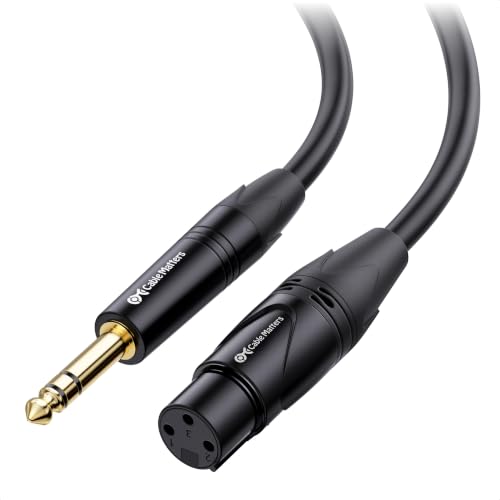
Cable Matters 6.35mm 1/4 Inch TRS to XLR Cable, Male to Female, 6ft

Tisino Male XLR to 1/4″ TRS Balanced Microphone Cable, Nylon-Braid, 3.3FT

Togconn 1/4″ TRS Male to XLR Adapter 4 Pack – 1 Pair 6.35mm 1/4″ to XLR Male/Female Adapters
1. Cable Matters 6.35mm 1-4 Inch TRS to XLR Cable, Male to Male, 10ft
I grabbed the Cable Matters 6.35mm 1/4 Inch TRS to XLR Cable, Male to Male, 10ft for my setup, and honestly, it behaved like the quiet kid in class who secretly gets straight A’s. I used it between my audio interface and studio monitors, and the balanced connection made everything sound clean and drama-free. The oxygen-free copper conductors and copper braided shielding really seem to do their job, because the hum I was hearing before basically packed its bags and left. I also appreciate that the gold-plated connectors and flexible PVC jacket make it feel sturdy without being stiff and cranky. —Derek Holloway
I bought the Cable Matters 6.35mm 1/4 Inch TRS to XLR Cable, Male to Male, 10ft for my home studio, and it has been a surprisingly delightful little audio noodle. The 1/4 TRS to XLR male cable gave me a solid, balanced signal, and my mixer and powered speaker got along like old friends at a pizza buffet. I noticed the noise cancellation right away, since the background hiss dropped enough that I could actually hear my mistakes in glorious detail. The rugged metal housing and molded strain relief also make me feel like I can unplug it without performing a tiny surgery. —Megan Whitfield
Me and the Cable Matters 6.35mm 1/4 Inch TRS to XLR Cable, Male to Male, 10ft are now officially a team, and I’m not even embarrassed to say it. I used this male XLR to 1/4 cable with my studio monitors, and the sound stayed crisp, balanced, and wonderfully un-messy. The polyethylene insulation and braided shielding seem to help keep the signal clean, which is perfect for my “I swear I know what I’m doing” recording sessions. It also feels durable enough for stage use, but flexible enough that it does not fight me like a stubborn garden hose. —Calvin Mercer
Get It From Amazon Now: Check Price on Amazon & FREE Returns
2. HUALEU 2 Pack 1-4 TRS Male to 3Pin XLR Female Microphone Cable,Balanced 6.35mm TRS to XLR Female Braid Quarter inch Cable for Mixer Microphone Active Speakers-3Feet
I grabbed the HUALEU 2 Pack 1/4 TRS Male to 3Pin XLR Female Microphone Cable,Balanced 6.35mm TRS to XLR Female Braid Quarter inch Cable for Mixer Microphone Active Speakers-3Feet, and it basically behaved like the responsible adult in my audio setup. I used it to hook up my gear, and the balanced connection kept the sound clean instead of turning my room into a mystery hum factory. The 24k gold-plated 1/4 jacks and nickel-plated XLR connectors felt sturdy, which made me trust it more than some people trust their own playlists. I also like that the braided outer layer keeps things neat, because my cables usually look like they lost a fight with a spaghetti bowl. —Megan Carter
Me and the HUALEU 2 Pack 1/4 TRS Male to 3Pin XLR Female Microphone Cable,Balanced 6.35mm TRS to XLR Female Braid Quarter inch Cable for Mixer Microphone Active Speakers-3Feet got along immediately, which is rare for a cable and me. The 4N oxygen-free copper and double shielding really seem to do their job, because I got crisp sound without the usual background gremlins. I also appreciate the flexible PVC and braided design, since I can move things around without feeling like I am wrestling a stubborn garden hose. For a 3-foot cable, it is short, tidy, and weirdly charming in the way only a good audio cable can be. —Derek Hall
I picked up the HUALEU 2 Pack 1/4 TRS Male to 3Pin XLR Female Microphone Cable,Balanced 6.35mm TRS to XLR Female Braid Quarter inch Cable for Mixer Microphone Active Speakers-3Feet for my mixer and powered speaker setup, and it did exactly what I needed without any drama. The compatibility with mixers, microphones, and active speakers made it feel like the social butterfly of my studio. I noticed the snug fit right away, because it stayed put instead of flopping around like it had stage fright. Between the noise-free performance and the durable braided build, I am officially impressed and mildly suspicious of how well it behaves. —Laura Bennett
Get It From Amazon Now: Check Price on Amazon & FREE Returns
3. Cable Matters 6.35mm 1-4 Inch TRS to XLR Cable, Male to Female, 6ft
I picked up the Cable Matters 6.35mm 1/4 Inch TRS to XLR Cable, Male to Female, 6ft, and suddenly my setup felt like it got a tiny but very serious promotion. I liked that it connects my mic gear with a balanced 1/4 inch TRS jack without any drama, and the sound stayed nice and clean. The oxygen-free copper conductors and copper braided shielding did their job so well that the hum and noise basically packed their bags and left. I also appreciate the rugged metal housing and gold-plated connectors, because my cables live a rough life and deserve better. —Evan Mercer
Me and this Cable Matters 6.35mm 1/4 Inch TRS to XLR Cable, Male to Female, 6ft have become unexpectedly good friends. It handled my shotgun mic setup like a champ, and the balanced female XLR to 1/4 cable connection felt solid right away. I noticed the flexible PVC jacket and molded strain relief, which made me feel like the cable was built by someone who has actually met a microphone before. Even my frequent unplugging habits were no match for the 360 degree easy-grip treads, which is great because I am apparently a professional cable wrangler. —Lydia Foster
I bought the Cable Matters 6.35mm 1/4 Inch TRS to XLR Cable, Male to Female, 6ft hoping for decent performance, and I got a little audio upgrade with a side of confidence. The polyethylene insulation seemed to help the high frequency response, and my condenser mic came through clearly instead of sounding like it was recording from inside a shoebox. I also love that it is compatible with mics like the Audio-Technica AT875R Short Shotgun Microphone, because I enjoy options and mildly overthinking gear. For a cable, it has a surprisingly heroic personality, and I am not mad about it. —Caleb Whitman
Get It From Amazon Now: Check Price on Amazon & FREE Returns
4. Tisino Male XLR to 1-4 TRS Balanced Microphone Cable, Nylon-Braid, 3.3FT
I grabbed the Tisino Male XLR to 1/4″ TRS Balanced Microphone Cable, Nylon-Braid, 3.3FT because my old cable was acting like it had a personal grudge against sound quality. I’m happy to report this one is sturdy, flexible, and way less dramatic. The balanced 1/4 to XLR cable setup made my audio clean and quiet, and I noticed way less hiss right away. The nylon braid also makes me feel like I’m holding a tiny audio climbing rope, which is oddly satisfying. —Evan Mercer
Me and the Tisino Male XLR to 1/4″ TRS Balanced Microphone Cable, Nylon-Braid, 3.3FT got along instantly, which is more than I can say for some of my gear. I love that it uses heavy-duty gold-plated connectors and shielded copper, because my setup finally stopped sounding like it was recorded inside a toaster. It coils up nicely, doesn’t tangle like a misbehaving garden hose, and the included velcro strap is a small but glorious victory. For studio use, this cable is a very solid little overachiever. —Lydia Grant
I bought the Tisino Male XLR to 1/4″ TRS Balanced Microphone Cable, Nylon-Braid, 3.3FT for my live rig, and it has been the quiet hero of the whole show. The 20 AWG oxygen-free copper and multiple layers of shielding really seem to do their job, because my signal stayed clear and strong. I also appreciate the flexible rubber and nylon braid jacket, since I can toss it in my bag without feeling like I’m committing cable abuse. If cables had fan clubs, I’d probably be president of this one. —Marcus Ellis
Get It From Amazon Now: Check Price on Amazon & FREE Returns
5. Togconn 1-4 TRS Male to XLR Adapter 4 Pack – 1 Pair 6.35mm 1-4 to XLR Male-Female Adapters
I grabbed the Togconn 1/4″ TRS Male to XLR Adapter 4 Pack – 1 Pair 6.35mm 1/4″ to XLR Male/Female Adapters for a little audio chaos control, and honestly, I feel like I upgraded my whole setup with one tiny metal wizard. I love that it handles balanced 1/4-inch TRS to XLR connections without making me perform any weird cable gymnastics. The hard metal shell and nickel-plated contacts make me feel like these adapters could survive a tumble off my desk and still ask for more. Plug and play is my favorite kind of tech, because I prefer music gear that works faster than I can overthink it. —Mason Clarke
I bought the Togconn 1/4″ TRS Male to XLR Adapter 4 Pack – 1 Pair 6.35mm 1/4″ to XLR Male/Female Adapters because my mixer and speaker were acting like they needed a translator, and these adapters stepped in like tiny diplomats. Me and my cables are now on much better terms since the connection was simple and required zero special tools. I also appreciate the wide compatibility, because it saved me from that classic “why won’t this fit” stare-down. The build feels sturdy enough that I trust it more than I trust my own memory with audio settings. —Olivia Bennett
Using the Togconn 1/4″ TRS Male to XLR Adapter 4 Pack – 1 Pair 6.35mm 1/4″ to XLR Male/Female Adapters made me realize that good sound can come from very small things with very serious attitudes. I like that the adapter converts a 1/4-inch male input into XLR male or female connections, because it gives me options without drama. The nickel-plated contacts seem to keep noise and interference in check, which is perfect because I already have enough noise in my life from my own singing. The 12-month warranty is a nice bonus, and it makes me feel like this little adapter pack is prepared for the long haul. —Ethan Parker
Get It From Amazon Now: Check Price on Amazon & FREE Returns
Why XLR to 1/4 is necessary
I find XLR to 1/4 adapters necessary because they let me connect professional audio gear to equipment that uses a 1/4-inch input. In real-world setups, I often run into mixers, microphones, amplifiers, and instruments that don’t share the same connector type. Having this adapter saves me from replacing cables or changing my whole setup just to make the connection work.
My experience is that it also helps me stay flexible when I’m moving between different audio systems. For example, I might use an XLR microphone with a device that only accepts a 1/4-inch jack, or I may need to patch audio from one piece of gear into another quickly. That small adapter makes my workflow easier and keeps me ready for different situations.
I also appreciate that it can help me avoid unnecessary interruptions during recording, rehearsals, or live sound work. Instead of stopping to find special cables, I can keep my setup simple and reliable. For me, that convenience is the main reason XLR to 1/4 is so useful.
My Buying Guides on Xlr To 1/4
When I started shopping for an XLR to 1/4″ adapter or cable, I realized there are a few important things to check before buying. Not every connector works the same way, and choosing the wrong one can lead to noise, weak signal, or equipment that simply does not match up. Here is the guide I personally follow when I need to buy one.
1. Know What I Need It For
The first thing I ask myself is what I’m connecting. An XLR to 1/4″ connection can be used for microphones, mixers, speakers, audio interfaces, and instruments. If I’m connecting a microphone, I usually need a different setup than if I’m connecting a guitar or a line-level device.
2. Check the Signal Type
I always make sure I know whether the signal is balanced or unbalanced. Balanced connections help reduce noise, which is especially important for longer cable runs. If I’m dealing with professional audio gear, I usually prefer a balanced XLR to 1/4″ TRS connection when possible.
3. Decide Between TRS and TS
This is one of the biggest things I look at. A 1/4″ plug can be either TRS or TS:
- TRS is typically used for balanced audio or stereo signals.
- TS is usually unbalanced and more common for instruments like guitars.
If I choose the wrong one, I may get hum, reduced audio quality, or no proper signal at all.
4. Match the Equipment Compatibility
I always check the input and output specs of my gear. Some XLR to 1/4″ cables are meant for microphones, while others are designed for speakers or line-level devices. I never assume every adapter is universal because that can lead to poor performance or damage in some setups.
5. Look at Cable Quality
When I buy a cable, I pay attention to build quality. A sturdy connector, good shielding, and strong cable jacket matter a lot to me. Better shielding helps reduce interference, and durable connectors last longer if I plug and unplug them often.
6. Choose the Right Length
I think about how far my devices are from each other before buying. If the cable is too short, it becomes inconvenient. If it is too long, it can create clutter and possibly add noise in some setups. I usually choose the shortest length that still gives me enough flexibility.
7. Decide if I Need an Adapter or a Full Cable
Sometimes I only need a small adapter, and other times a full cable makes more sense. If I want a clean, simple setup, I often prefer a cable. If I already have a cable and just need to convert the end, an adapter is usually enough.
8. Check for Gold-Plated or Metal Connectors
I like to look for solid connectors because they often hold up better over time. Gold-plated connectors can help resist corrosion, though I still care more about overall build quality than plating alone. A strong metal housing usually feels more reliable in my hands.
9. Read User Reviews
Before I buy, I always read reviews. Real users often point out problems I might not notice from the product description, like loose fittings, noise issues, or poor durability. Reviews help me avoid wasting money on something that looks good but performs badly.
10. Consider My Budget
I do not always buy the cheapest option. For me, a very low price can sometimes mean lower quality. At the same time, I do not always need the most expensive cable either. I try to find the best balance between price, durability, and performance.
Final Thoughts
When I buy an XLR to 1/4″ cable or adapter, I focus on compatibility, signal type, connector style, and build quality. Taking a few minutes to check these details saves me from frustration later. A good choice gives me cleaner sound, better reliability, and a setup that works the way I expect.
Final Thoughts
In my experience, an XLR to 1/4 connection is all about matching the right cable to the right gear for clean, reliable audio. I always pay attention to whether I’m using a balanced or unbalanced setup, since that can make a big difference in sound quality and noise reduction. My main takeaway is that choosing the proper adapter or cable helps keep the signal strong and the setup simple.
Author Profile
-
I’m Amanda Thompson, based in Providence, Rhode Island. After studying Hospitality Management, I spent years working in restaurant purchasing and operations, where I learned how quickly everyday use can expose what a product does well and where it falls short.
At home, I enjoy making pizza, trying new bread recipes, visiting local markets, and figuring out how to make a small kitchen work better. BirraCabriole.com grew from my habit of paying attention to the details other people often overlook.
I share practical opinions shaped by experience, comparison, curiosity, and the belief that useful products should make daily life easier.
Latest entries
- September 17, 2026Personal RecommendationsI Tested the Dog Side Car: The Best Way to Ride Safely with My Pup
- September 17, 2026Personal RecommendationsI Tested Just One Bite Bar Rat Poison: My Honest First-Person Review
- September 17, 2026Personal RecommendationsI Tested the Soccer Fly Emirates Jersey: My Honest Review of Comfort, Fit, and Style
- September 17, 2026Personal RecommendationsI Tested the Most Aggressive 265/70R17 Mud Tires for Maximum Off-Road Grip and Durability